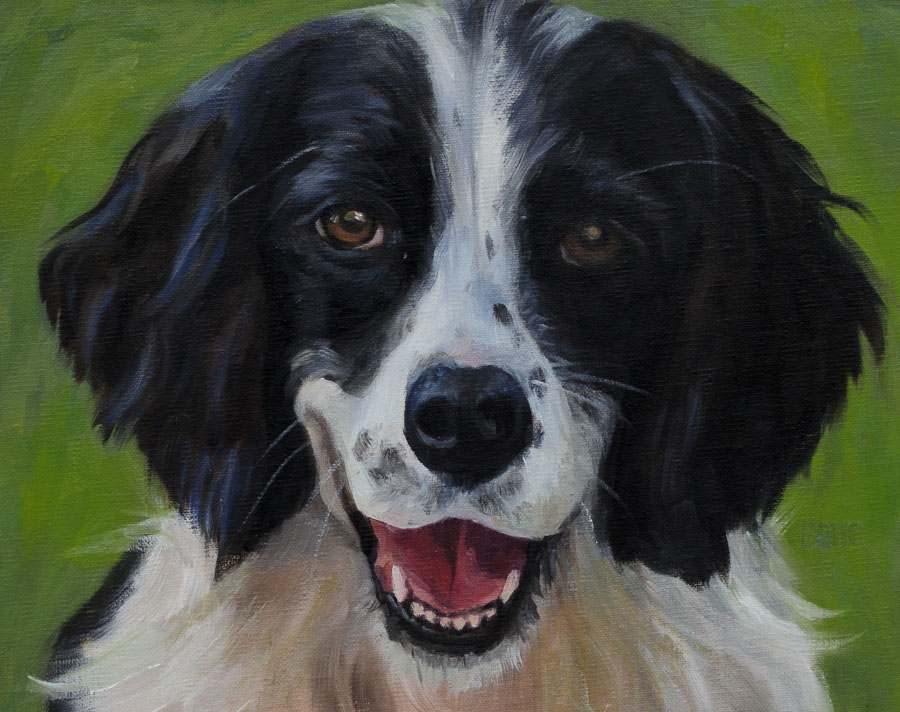
This was a first: when I delivered the painting it made its owner cry! And hug me. And make me cry! I know how much Puck, who is getting there up in dog years, means to his owner so I really wanted the painting to turn out well. And I got lucky; this one just seemed to paint itself. Of course I know that saying, “The more I practice, the luckier I get” which I think was true in this case. I put thought into the painting before I put any paint on the canvas and have certainly been putting in lots of practice time in the studio.
Puck, a warm-up sketch, ink & watercolor, 6×8″
I always start my paintings with at least one preliminary sketch to get to know the subject. I don’t try to do a perfect rendering, just a visual exploration and attempt to understand what I see.
Today was a big day for delivering commissioned and gift paintings. I delivered five: two watercolors (a large painting of a corporate headquarters commissioned for a gift to a retiring CEO, and a double portrait of two little sisters) and three oils (this and another dog portrait and a portrait of a woman as a gift for her husband).
I can’t post the others until they’ve been gifted. And I have two more dog portraits in progress. I love it!
(Update: This painting won second place for Portrait of the Year on Making a Mark in 2012.)
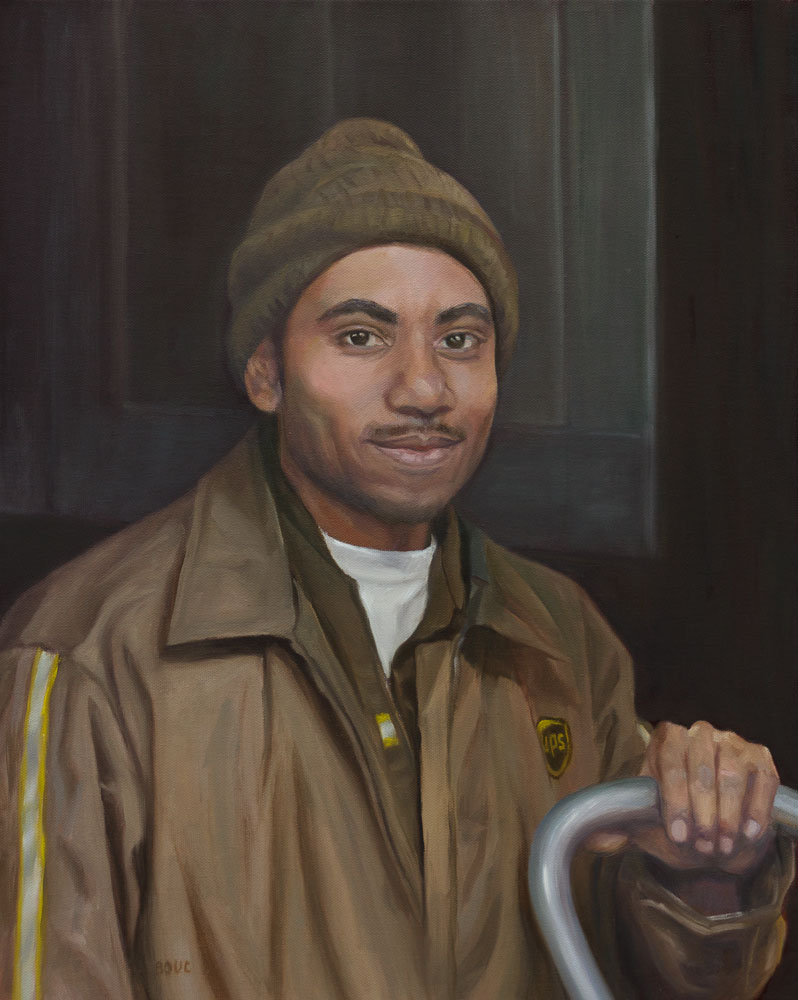
One night last winter two UPS guys arrived in the dark to deliver a dozen boxes of the flooring materials for my studio. I had started a series of paintings of people at work (still in progress) and asked if I could take their photo to use for a painting. They agreed and were great models!
A couple of months ago he called, asking about the painting, inspiring me to finally finish it. There were some magic moments along the way (see process photos below), such as the one where I did a quick first pass on his hand and then stepped back and said “Wow! That works and I’m not touching it again.”
Since I took the photos at night without flash outside lit only by the fluorescent lights from inside the studio, the photo was dark and the colors were, well, mostly brown. But the UPS slogan is right, BROWN really does deliver! Who knew there were so many shades of brown? I must have mixed a hundred different browns.
Below are photos showing the process of drawing and painting this portrait.
Planes of the Head, Grisaille study, oil on canvas panel, 11×14″
When I bought a “Planes of the Head” life-sized plaster cast two years ago I wanted to learn more about portrait painting. I put it on display in the studio and studied it. I knew I should be drawing and painting from the cast, but hoped learning would happen by osmosis since it didn’t really inspire me as a painting subject.
Planes of the Head Plaster Cast
Then I got curious about grisaille techniques after seeing beautiful paintings that began with that approach. I watched the excellent video “How to Paint: The Grisaille Method” by Jon deMartin (in which he paints from a cast of Julius Caeser) and decided to try grisaille using homely Frankie Flathead, my Planes of the Head cast, as my model. See bottom of post for a clip of the deMartin video.
Open Grisaille in which Frankie resembles a demented old perv
I was going to display all my steps along the way, but my photos weren’t good enough. Above is the first stage, the “open” grisaille, which means it’s painted thinly, using only transparent washes of grey (or in this case, burnt umber) and wiping paint off to achieve the lighter values. At the top of the post is the “closed” grisaille, made by mixing and applying a range of values opaquely, using white and the same burnt umber on top of the original “open” grisaille.
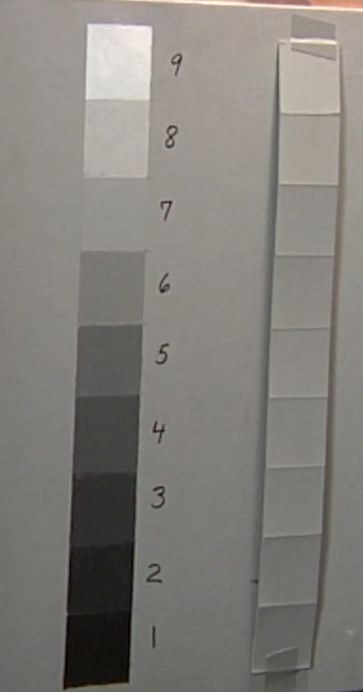
One of the most powerful things I discovered in the video is the way light changes across planes.
9-step Value Scale (white to black) on left and strip painted Value 4 Gray on right (screenshot from video)Same Value as image to the left but the Value 4 Gray strip is curved to show the range of values as it turns away from light (screenshot from video)
When bent so planes are at different angles to the light, the gray strip on the right seems to have all the values in the 9-step value strip on the left. Isn’t this a powerful demonstration of the effects of light and shadow?
My first attempt at grisaille was interesting. I made many mistakes and got lots of good practice.
My finished painting isn’t great, but doing the study helped prepare me for the next lesson I gave myself (and that I enjoyed more and will post soon): starting with a grisaille to set the value structure in a still life and then adding the color in the same values.
Below is a clip from the video. I was very curious about how grisaille works so it was worth the $35 to download the three-hour program, also available here to watch online and DVD.
(Disclaimer: I have no connection to or receive no benefit from writing about these products)
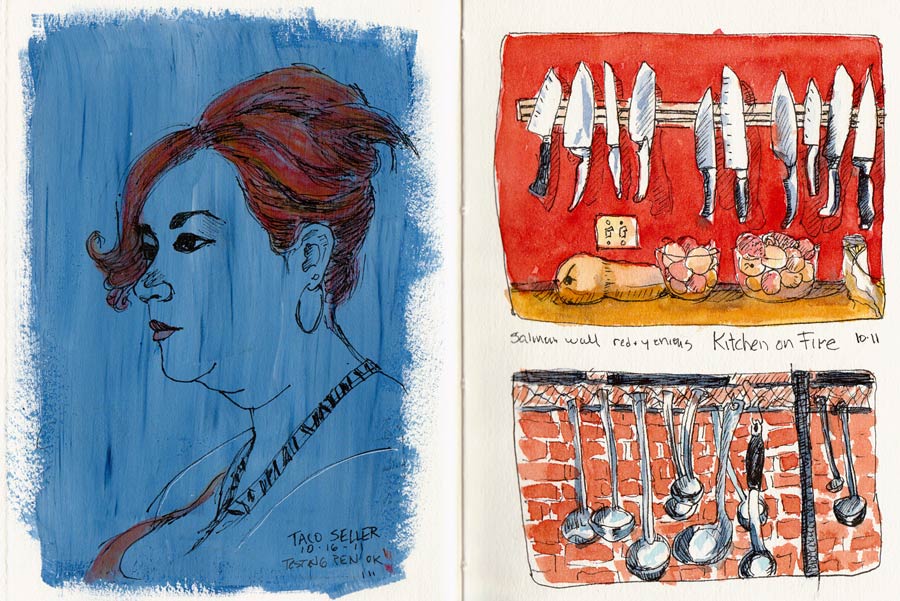
County Fair Taco Seller, ink, acrylic, watercolor, 7x5"
I finally started working on a series of 16×20″ oil portraits, mostly of people who work in my neighborhood shops. It took a long time to figure out how I wanted to approach the paintings and in the meantime I made several preliminary sketches in my journal.
This blue series began as a way to cover a really ugly page in my journal. To cover the mess, I mixed some Golden Absorbent Ground (gesso-like, but designed to prepare surfaces for watercolor painting) and some ultramarine blue watercolor. I didn’t mix it very well, as you can see from the streaks, but I actually like it this way. Drawing with a pen worked well on it too. When taco girl (above) dried, I painted in her very red hair.
Kim the Barista, ink & acrylic & watercolor
I covered two more pages in my journal with the remaining blue Absorbent Ground. Something went a little wrong with my drawing of Kim’s eyes (above) which don’t quite match in size or location. Oops. I sketched Kim before (see pics here) when I was taken by the scene’s resemblance to Manet’s “Bar at Folies Bergère.”
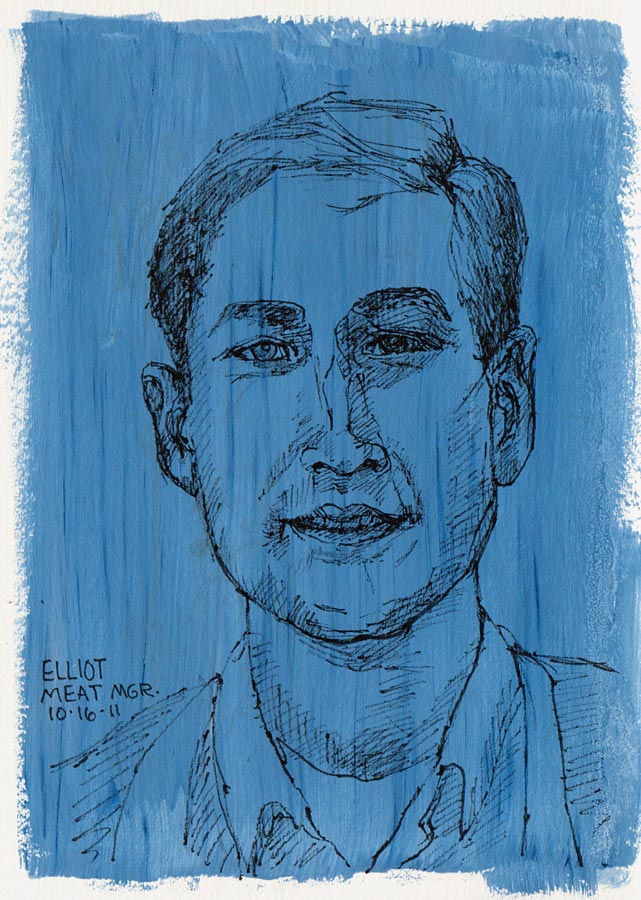
Elliot, Meat Manager, ink and acrylic
I felt a little embarrassed to ask Elliot to let me take a photo of him behind the meat counter but I had to. There is something old-fashioned about him that always makes me picture him in a Norman Rockwell painting. I had a little problem with one of his eyes too, but his oil painting is coming along nicely.
Taco Girl and Kitchen on Fire Spread in Journal
This is the spread in my journal where this series started. The Taco Girl oil portrait is half done. It will be a while before I finish and post the oil paintings but I am enjoying working on several at once, so that while a layer of one dries another is ready to work on.
And I’m so happy to have figured out how I want to paint them: I’m painting how I paint! More about that in another post.
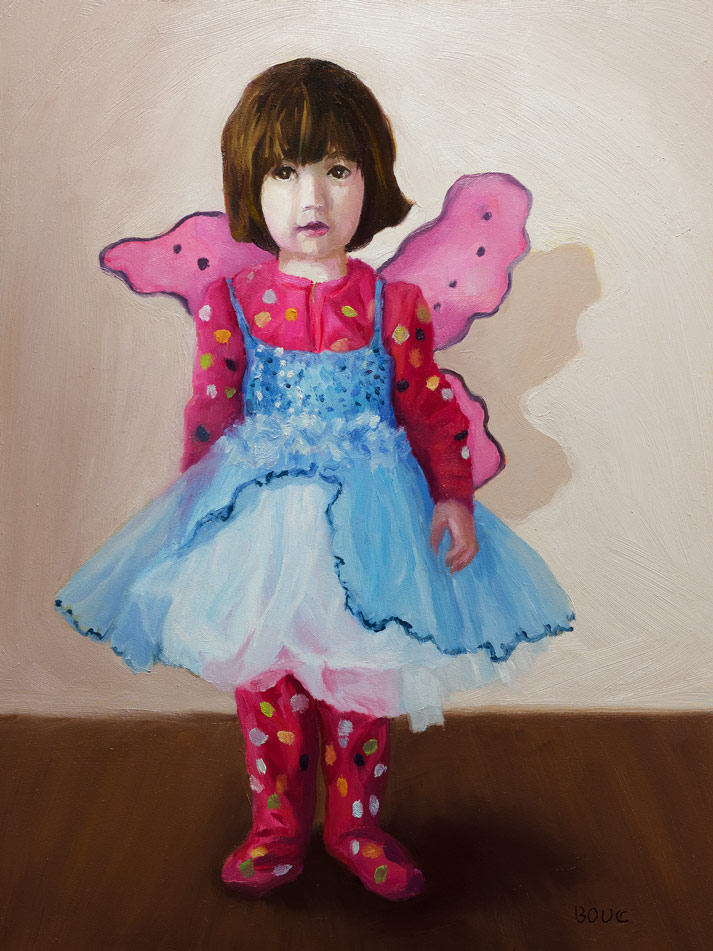
When one of my sketch group members sent me this photo of her little girl, I had to paint it, despite having never painted my own kids (except as they appeared in a dream once, as a bear and a tiger).
The original photo was taken on an iPhone with a busy background of kid’s toys and furniture. I experimented in Photoshop with different backgrounds and color schemes. I tried some in paint. But in the end I chose this simple grayish-warmish-whitish background.
I thought about putting some of her toys from the photo in the painting but decided I like the way she’s alone in an empty space. It reminds me of my own childhood photos where I usually looked kind of alone and perplexed about the big world around me. I guess that’s an example of how whatever the artist paints, she’s painting herself too.
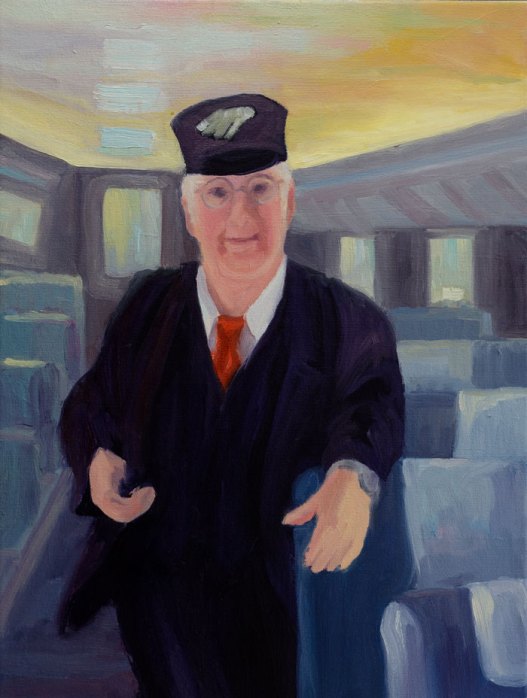
Capitol Corridor Amtrak Conductor, Oil on stretched canvas, 16x12"
When my Urban Sketchers group took the train to Sacramento for some sketching (posted here and here) I made a pest of myself taking pictures of our conductor, chasing him around the train and station. A train conductor for over 40 years, he kindly put up with me.
The painting above is my second attempt at painting the conductor (after working and reworking and eventually abandoning a previous canvas). I painted this in one day, intending to return and finish it after putting in my time at my “day job.” When I returned to the studio I realized that I’d said what I wanted to say with the painting and had nothing more to add. I was done.
This was really thrilling as it helped to reinforce my recent discovery that the path I want to follow in oil painting is to work directly, alla prima (all at once). I find it so much more fun than fussing around with many layers, for many days, until everything is “perfect” (otherwise known as overworked, over-detailed and ultimately, boring to look at it because there’s nothing for the viewer’s mind to contribute).
Below is my unfinished, abandoned first attempt (scraped and repainted multiple times) from a dim, blurry bad photo shot with poor lighting inside the train.
Incomplete first attempt, oil on canvas 16x12"
I included way too much of the train in the composition because I was interested in the light and reflections on the ceiling. But painting all those seats was really boring. Eventually I figured out this version just wasn’t going to work and I started over with a better photo, cropped in more closely, for the painting at the top of the post.
I’ve been taking photos of people at work in my neighborhood that will be part of this series. Next up the butcher and the coffee barista.
When I saw the photo I’d taken of this boy at the Legion of Honor where he was posing for his sister’s Quinceanera party photos, I knew I had to paint him (see my original blog post about that day). He is such a beautiful boy.
When to Stop Painting
Lately I’ve been focusing all of my art time on oil painting, and discovered something that might be of interest to other painters.
One night I’d been painting into the wee hours, trying to “fix” a painting. I’d put on paint, step back, then scrape it off. When I realized I didn’t know why I was doing anything I was doing, I went to bed, frustrated that after hours of painting I’d accomplished very little and in fact, probably just made things worse.
The next day I was driving to a plein air paint-out using my GPS to get me to cross streets near the destination (a little park with no address). Once I passed those cross streets, my GPS began scrolling the words “Driving….driving….driving” on the screen because it no longer had any directions for me—I’d passed the target with no further plan.
That’s when it hit me: When I’m at the point with a painting where I am just driving….driving…driving (or dabbing, scraping, dabbing) I need to STOP.
Without a conscious and specific intention (make this area cooler, warmer, darker, lighter, bigger, smaller, sharper, softer, etc.) and an overall goal, it’s just like trying to reach a general idea of a destination by driving mindlessly and randomly, hoping I’ll get there. Not too likely.
I dreamed that Bob Dylan was having dinner with my friend Michael and he invited me to tag along. They talked seriously about music trivia for hours in the old wood-paneled café. I was surprised at how much better Dylan looked in person. I was going to tell him but decided it sounded too dumb. So I just sat there silently, trying to inconspicuously flirt with him.
Then my calico cat Fiona woke me up, making those telltale, pre-puking sounds cats make. I pushed her off the bed and tried to go back to sleep since it was still dark. Just as I’d finally fallen back asleep she started licking my eyebrow. I gave up trying to sleep and spent the day feeling dopey and too tired to do the oil painting I had planned.
Instead it seemed like a really good idea to wash off the entire background of the Big Tulip painting I thought I’d “finished.” More about that later…now off to get some sleep!
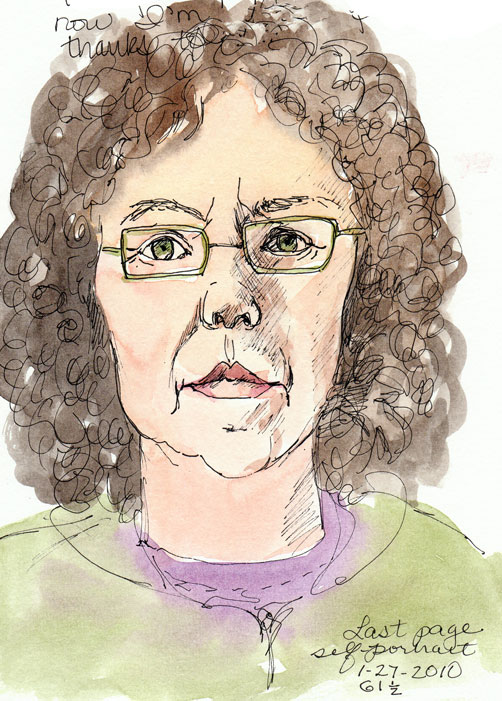
Last page self portrait. Ink & watercolor, drawn from life
In Louise Stanley‘s “Rules for Keeping a Sketchbook,” her rule number two is “Start on the third page to get your courage up.” Number three is “Go back to the first page and do a self-portrait when you’ve got the nerve.” At her exhibit it was great seeing some of her (often comical) self-portraits from journals spanning decades.
For my own journals, I preferred the idea of making the last page a self-portrait instead. That way it still creates a record of the YOU that put all that stuff in the journal, but it’s not there staring back at you every time you open the book. So this is my self-portrait on the last page of the Fabriano Venezia sketchbook.
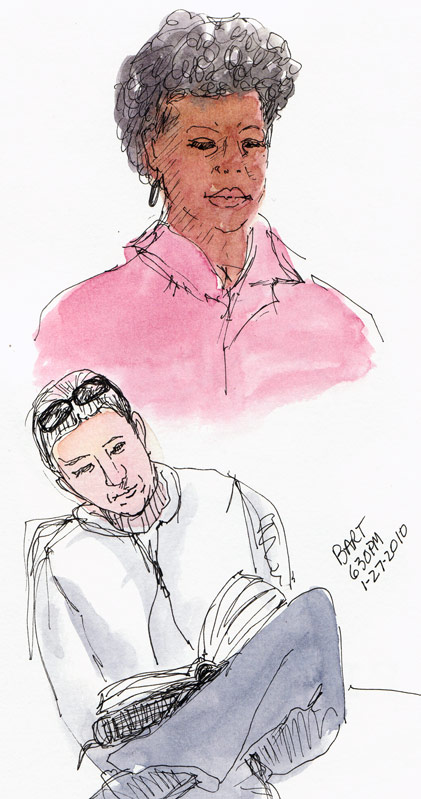
BART Riders, ink and watercolor
And this is the second to last page. Just a couple of subway riders with a bit of watercolor added later. I’m about a quarter of the way into the new journal I bound myself and am really loving it. My next posts will be from that journal.
And now it’s Friday night and what has felt like a very long, exhausting work week is finally over and I get to transition back to my art life. But that will be tomorrow. Tonight I’m just interested in a good night’s sleep.
I met a very quirky 76 year-old woman artist who has made her home, her car and her self into a wonderful, crazy work of art. I’ll share more about her next time, but today wanted to post this self-portrat she inspired.
I’d been feeling discouraged about oil painting after doing a terrible plein air painting on Saturday but meeting that woman on my walk today, I was inspired to braid my hair and decorate myself with make up and do a self portrait in oils.
I started by setting up a mirror but found it awkward to paint while having to keep looking in a mirror to my right and making the same face. So I took photos, shooting into the mirror, and then displayed the best one on my computer monitor and worked from that. Here’s the photo I used:
Reference photo of me
I started by drawing with white pastel pencil on an already toned canvas (actually a reused canvas: the first painting I did when I picked up oils a year or so ago — a portrait of my sister that was so terrible that I scraped it and covered it in a warm brown oil paint to be used again). I like sketching with a pastel pencil because it rubs off easily from a primed canvas and disappears into the oil paint without streaking or smearing.
Pastel drawing on toned canvas
Then I photographed the drawing bove and pasted the image as another layer in Photoshop on top of the reference photo, adjusting the new layer to 60% opacity. That allowed me to see where my drawing was off and make the adjustments on my canvas. You can see in the overlay below that I’d missed in many places, despite my attempt at accuracy.
Drawing overlapping photo
I’ve learned the hard way that an incorrect drawing just leads to a bad painting. I could have just enlarged the photo and traced it right onto my canvas, but I love drawing and wanted the challenge of drawing myself somewhat accurately. I think the final painting does look a bit like me and it was definitely fun to do.
I’m going to wear my hair like this to work tomorrow. And I’m not going to give up oils.










 Jana Bouc, Artist