Merry Christmas Santa (version 6), oil on panel, 8x6
People are living in the park known as the Albany Bulb again. On a walk we saw more than a dozen homemade shelters, tree houses and tents hidden away in the brush, this one (below) complete with Christmas tree.
Christmas at the Albany Bulb
Although I no longer celebrate Christmas with trees and gifts myself, I always like to get out my Santa (at top of post) that was given to me by a wonderful former student who died not long after in a motorcycle crash. The funny, cheery Santa always reminds me of the value of generosity and the transitory nature of life.
I hope Santa finds the homeless families living in the park and makes their Christmas bright. It can’t be much fun camping out in the mud, pouring rain and wind we’ve been having.
And I hope all of you are having a wonderful winter holiday too!
My favorite parts of this painting are where I put the paint down and left it alone (like in the little white dish and teabag). I don’t know what comes over me at the end of a painting session when I start adjusting things that don’t need it. The spoon had been fabulous but after a “teensy” fix that wasn’t, and led to repainting, it lost it’s zing.
One of the many things I’ve learned from the Peggi Kroll-Roberts videos is to use a mirror to look at the painting to check for problems. You stand with your back to the painting and hold up the mirror as if to look at yourself. I’d heard of this technique before but didn’t really “get it” until now. Problems with values, perspective and unequal sides of an object really stand out when you see your work backwards in the mirror.
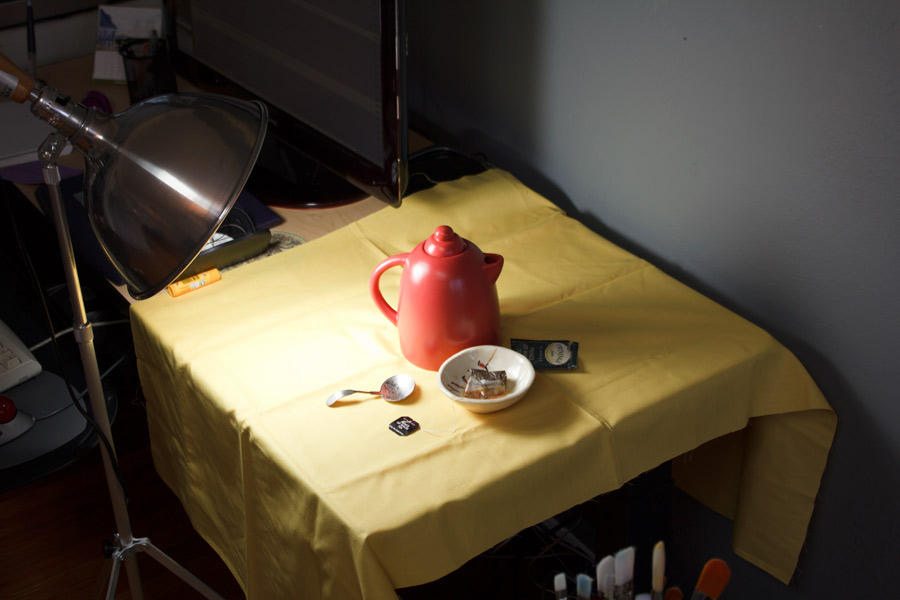
View from the easel of the set up
The teapot was my gift at my office’s “Silly Santa” gift exchange. Everyone brings one wrapped gift, we draw numbers and select from the pile in the order of the numbers drawn. You can pick a new gift or steal from someone who has already opened one. It’s always fun with much laughter and misbehavior.
My friend Kathryn Law wrote on her blog about the workshop she took with Peggi Kroll-Roberts and about Peggi’s instructional DVDs. The videos focus on the things I most wanted to learn, especially creating strong value patterns and making rich painterly brush strokes, along with loosening up and having fun. I ordered the videos and watched them. Wow!
The Buddhist proverb, “When the student is ready the teacher will appear” is so true. I had to have tried and given up on so many other approaches to oil painting to become very clear on what I didn’t want, what I did want (working with the freedom and looseness I have when I sketch) and what I needed to get there (all the things Peggi teaches).
Watching Peggi demonstrate and explain what she’s thinking and doing as she does it is such a rare ability in painting teachers in my experience. Her videos answered many questions I’ve had for so long. I’ve read dozens of books and gotten great advice from artist friends, but until I watched Peggi’s videos, I just didn’t get it.
I’d almost given up oil painting in frustration but now… Yippee! Oil painting is fun again!
About the painting:
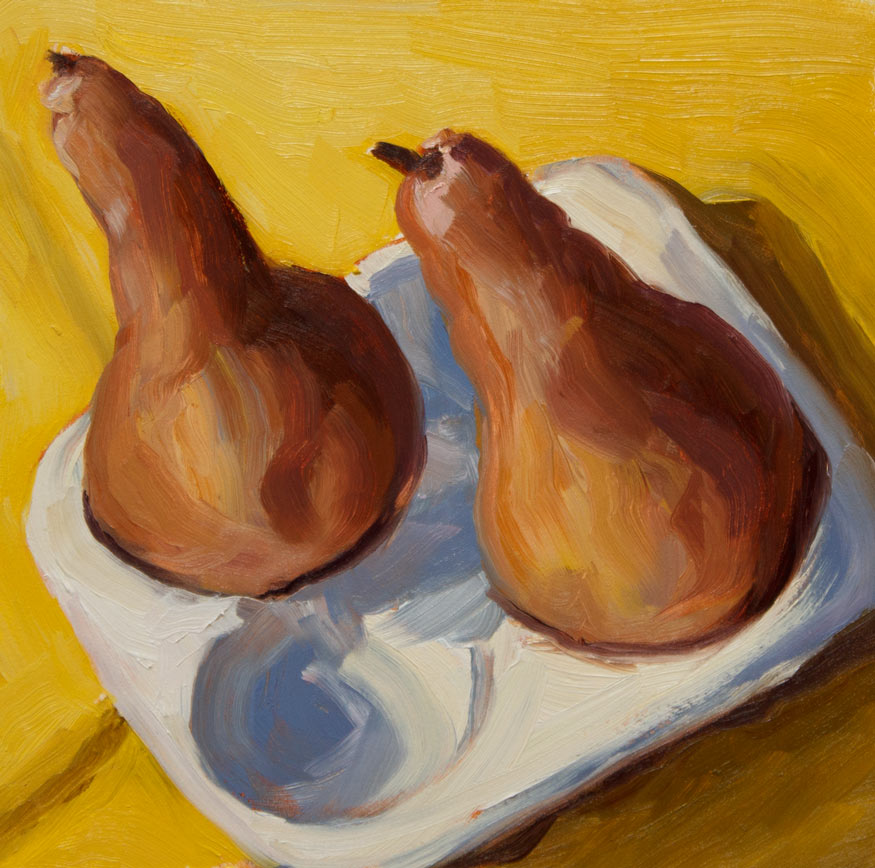
While bosc pears aren’t as pretty or colorful as other types, when I saw the way they were sitting in their container, one seeming like it was “striving” to reach, copy, or catch up with the other, I had to paint them. I used the techniques/tools I learned in Peggi’s videos and really enjoyed the painting process (and the results).
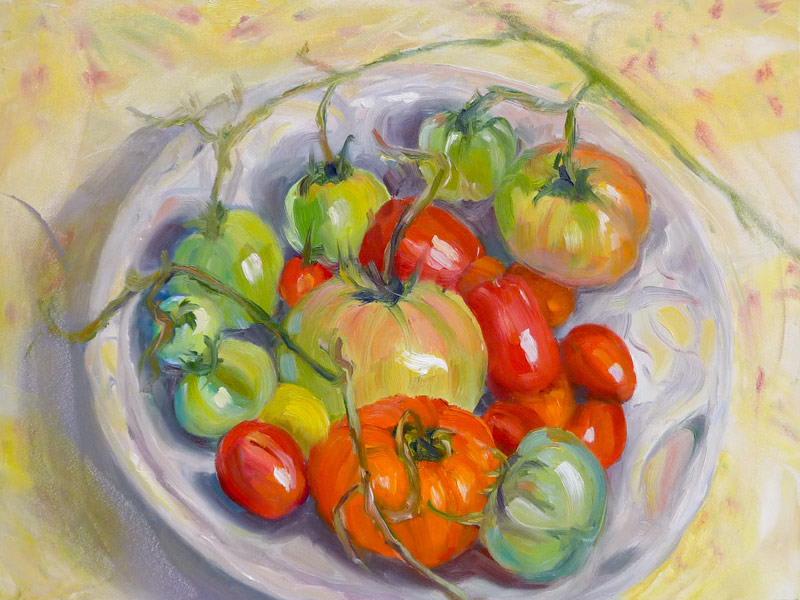
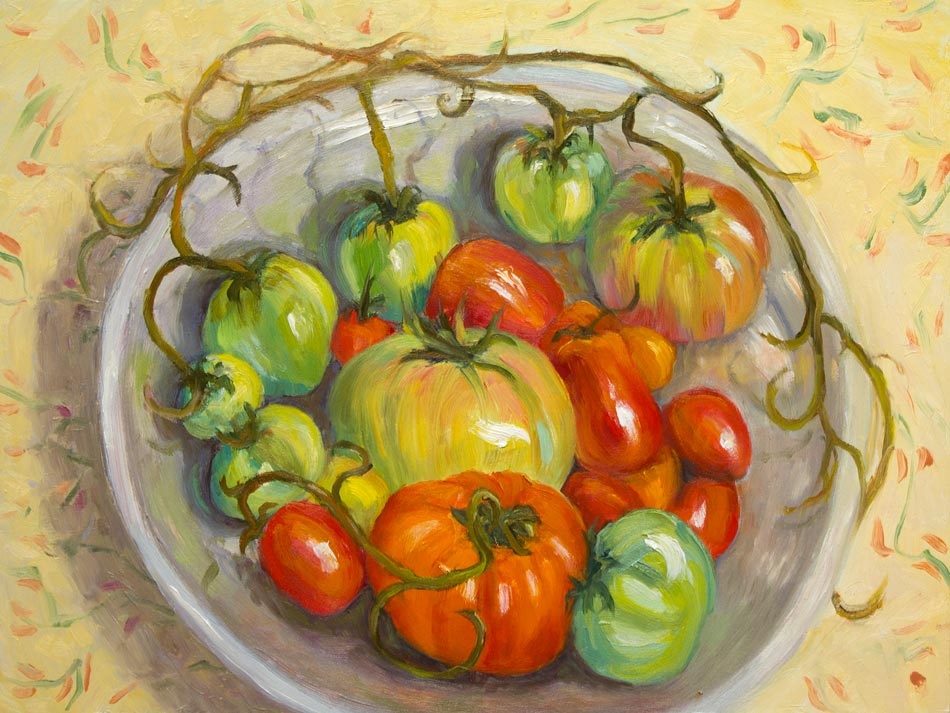
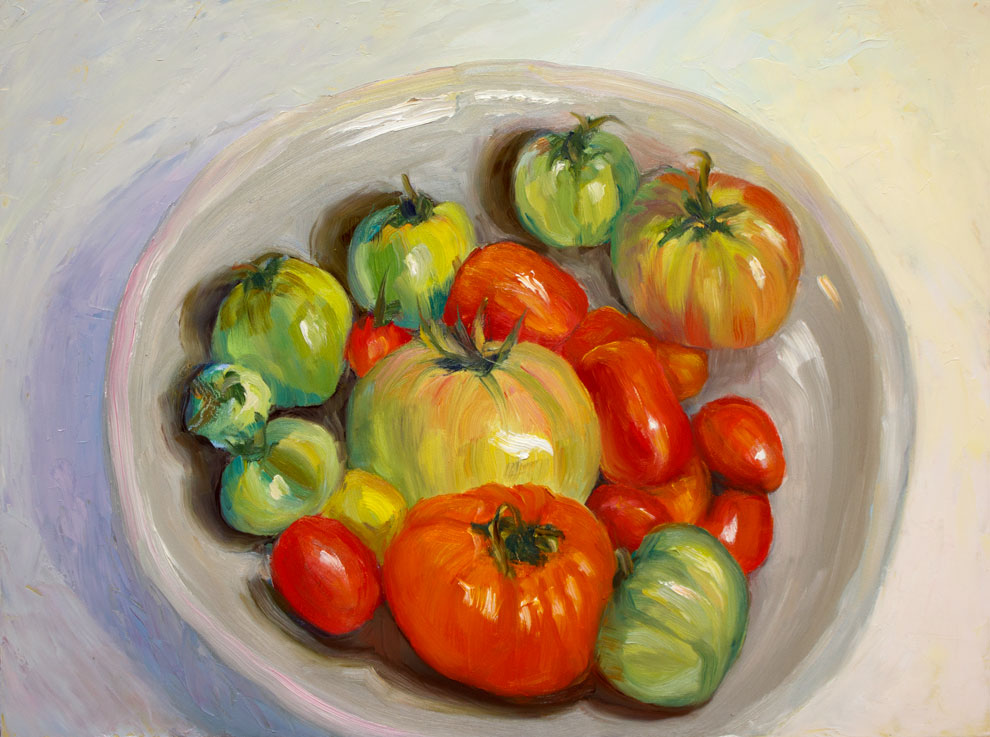
After wishing I could hit “rewind” to get the tomato vines/stems and patterned cloth back in the November Tomatoes oil painting, I realized that I could just paint them back on thanks to the wonders of oil paint.
For reference material I used the photo of the original painting and the tomato vine/stems that I’d snipped off but still had (having saved them for my cats to play with). I experimented first in Photoshop, “painting” stems on the photo of the previously “finished” painting to try to come up with a design that carried the eye around and not out of the painting.
Then I mixed up some stem colors and had fun swirling them on the painting. I worked a bit more on tomatoes, shadows, added some color and reflections in the bowl and painted the background again. I think it’s a happier picture now, and one that presented me with many learning opportunities. So I’m happier moving on too.
November Tomatoes in Raku Bowl; oil painting on board, 9x12" (click to enlarge)
UPDATE 12-11-10: I revised this painting again and it’s posted here.
At the end of the season we harvest the crops (or in my case, tomatoes). The last green stragglers are picked from their shriveling vines and set near a window to ripen. And that leads me to think about my own ripening as an artist; reflecting on which artistic pursuits have borne fruit, and which are still hard and green despite my best efforts.
After working in a realistic style in watercolor for years I began to explore other media, eventually focusing on oil painting, determined to gain comfort and competence with it. The path felt wide and long because I’m attracted to so many painting styles, from classical realism to impressionism and even expressionistic figurative work.
But as I get closer to competence with oils (while still far from mastery) I’m beginning to narrow the path and here’s why….
Oils vs. Watercolor
I found that trying to paint in oils in the same detailed, realistic style I enjoy so much in watercolor felt like work, not fun. But why, I wondered.
It’s nice to remember those sunny summer and fall days when painting outdoors required sunscreen, not rain gear. Back in October I painted this view from the former refinery “company town” of Tormey. Now Tormey is just a couple blocks long on the edge of the Tosco Oil Refinery near Crockett. At the end of the main (only?) street is a small paddock with horses and goats. It was a fun place to paint.
I did 75% of the painting onsite and finished it in the studio from this photo:
Reference photo for Tormey, CA
Now it’s another rainy Sunday here in the San Francisco Bay Area, but after a great walk in the hills between showers, I’m happy to be in the studio working on several paintings in progress.
Thanksgiving After Dinner Sketch, ink & watercolor
Most of the year my sister Marcy’s dining room is her art studio, and the table is full of art projects in process. For thanksgiving dinner she graciously hauled all of her studio stuff into the spare room and set a beautiful table for ten, complete with grandma’s china, table cloth and candles. When dinner was over the table’s real purpose called out to me and I sketched and painted by the warm glow of the candles.
The next day in honor of our turkey feast, I painted wild turkeys from photos I’d taken last summer on an evening walk in Tilden Park.
Turkey, oil on panel, 6x6"
I started with oils but found it frustrating, especially on the small panel (above) so I switched to ink and watercolor in my sketchbook (below).
Tilden Park Turkey, ink & watercolor
The turkey guy above was strutting his stuff, showing off for a lady turkey. When she ignored him and wandered off down the path, turkey dude and his buddy followed behind, shaking their tail feathers, still trying to get her attention.
Stayin' Alive Turkey Trot
I imaged the turkey dudes strutting to the song “Stayin’ Alive” by the BeeGees that starts with:
“Well you can tell by the way I use my walk. I’m a woman’s man; no time to talk…”
OMG! Those tightie whitie pants! Here’s last year’s Thanksgiving Leftovers post (same table).
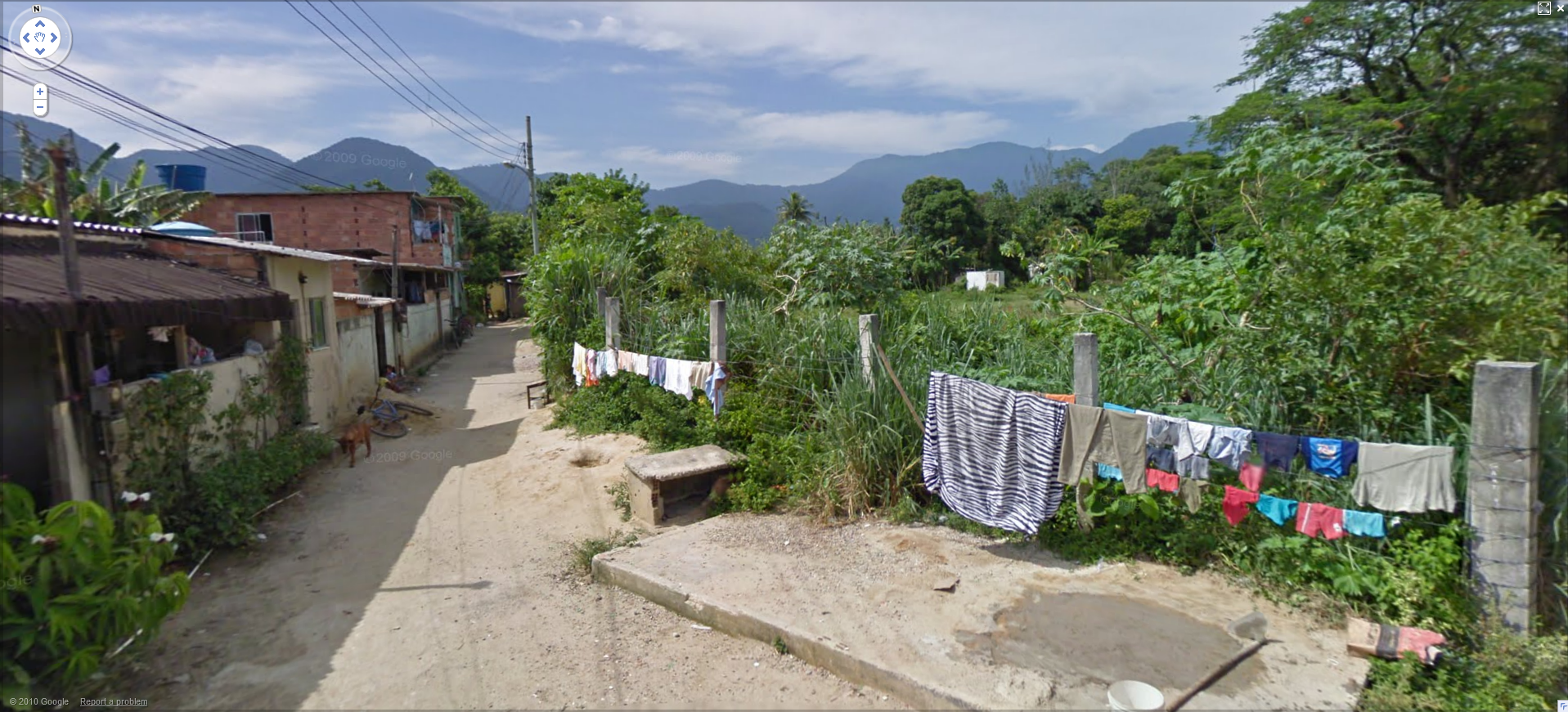
This month’s Virtual Paint-Out location is Rio de Janeiro, Brazil. Since I seldom travel I find it so much fun to do so virtually via Google Street View. I love being able to wander, exploring roads to see where they go without fear of getting lost (let alone dealing with airports or spending the money).
Here’s the way the scene looked on Google and then the way I cropped and the way I adjusted it in Photoshop.
Original Google Street View, RioRio Photoshopped for painting
As I do these each month I’ve noticed patterns in the way nicer houses and neighborhoods are near beaches or on top of hills and the poorer neighborhoods are indeed on the wrong side of the tracks.
I’ve also noticed a sense of freedom when painting these since I don’t have so much investment in the outcome. And maybe that’s what led to my liking most of my Virtual Paintout paintings more than the ones I’ve labored over.
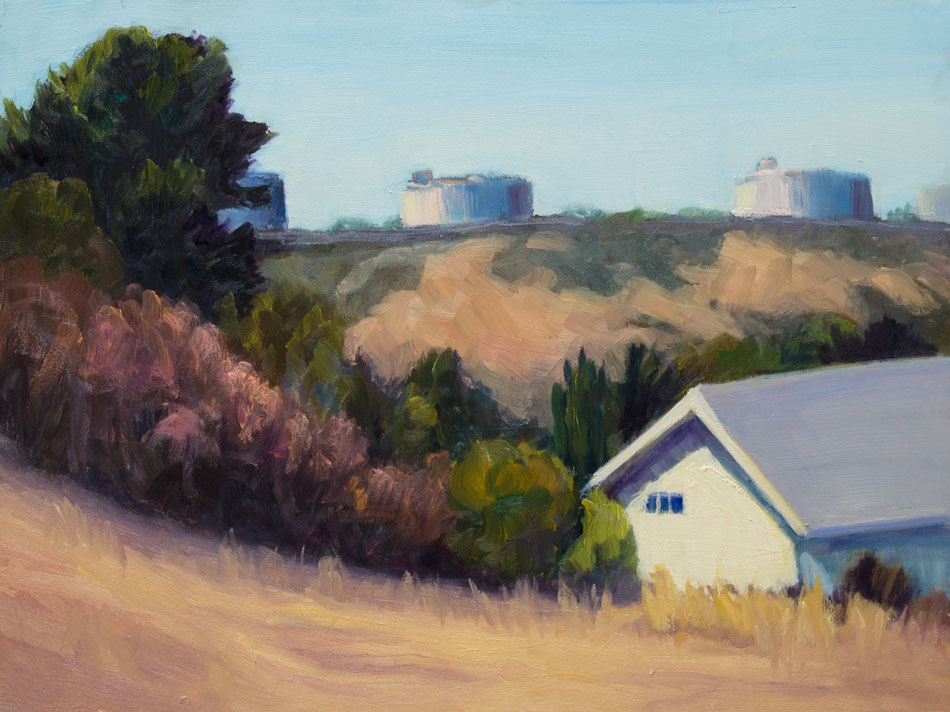
This oil landscape painting started as a poorly drawn, wrongly colored plein air painting which I’ve reworked many times until I am now finally ready to call it done. The painting started on a hot September day when I dragged my painting gear up a trail and set up my easel amidst dried cow pies and weeds near the Bull Valley Staging Area above the hills of Crockett. You can see my learning process below.
First, here is the washed-out reference photo I had to work from back in the studio. It’s really not even an interesting scene and doesn’t at all capture the way the hills were glowing a brilliant end of summer California gold.
Grey Day at Lake Anza, plein air (mostly) oil on Gessoboard, 10x8"
Only two of us showed up to paint at Lake Anza in Tilden Park on an almost-drizzly, grey Monday morning last month. The air smelled fresh and clean and it was so quiet there; a wonderful change from the noise of the city just a few miles away.
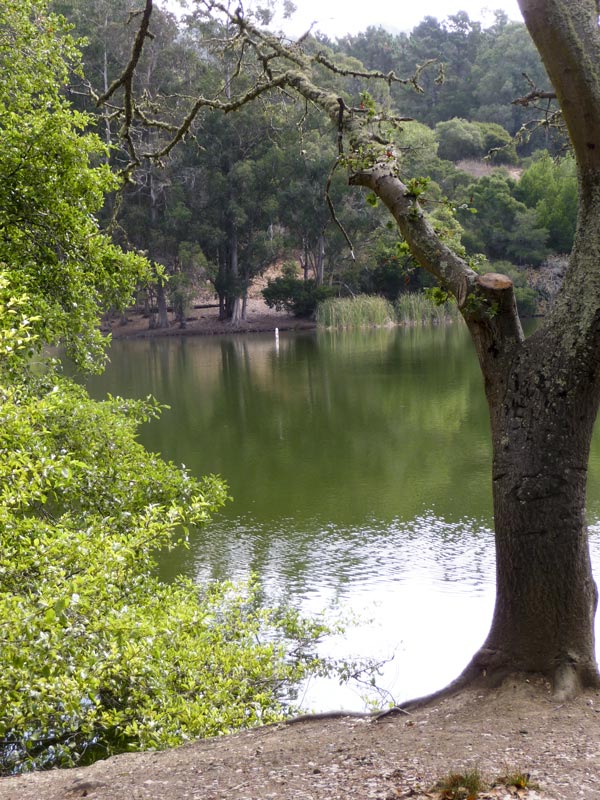
I painted most of this onsite, with some corrections and clean up later in the studio from the photo below.
Lake Anza reference photo
One of the corrections I made was to the little clumps of marsh grasses on the other side of the lake (barely visible in the revised painting). They had been my focal point but I realized when I got home and looked at the photo that I had made them three times bigger than they should have been.
Yesterday I was painting in Sonoma and saw the same problem when I got home: I painted some distant trees way bigger than they should be. It’s interesting to me how as I focus on one element of painting and begin to improve it (like composition, values, color, etc.), I discover another area needing work. Next time I’ll pay attention to measuring/comparing sizes of the things in the painting.
While I’m still miles of canvas away from mastering plein air painting, at least I am beginning to grasp the principles and see that while there are many important concepts to consider out there, the list isn’t endless (as it once seemed). Maybe eventually it will become more automatic like driving; I’ll still have to pay attention and keep my eyes on the “road,” but I won’t be driving over curbs, crashing into things, or totaling my car/canvas.






 Jana Bouc, Artist