Categories
Flower Art Oil Painting Painting Plants Still Life

Daffodils Again

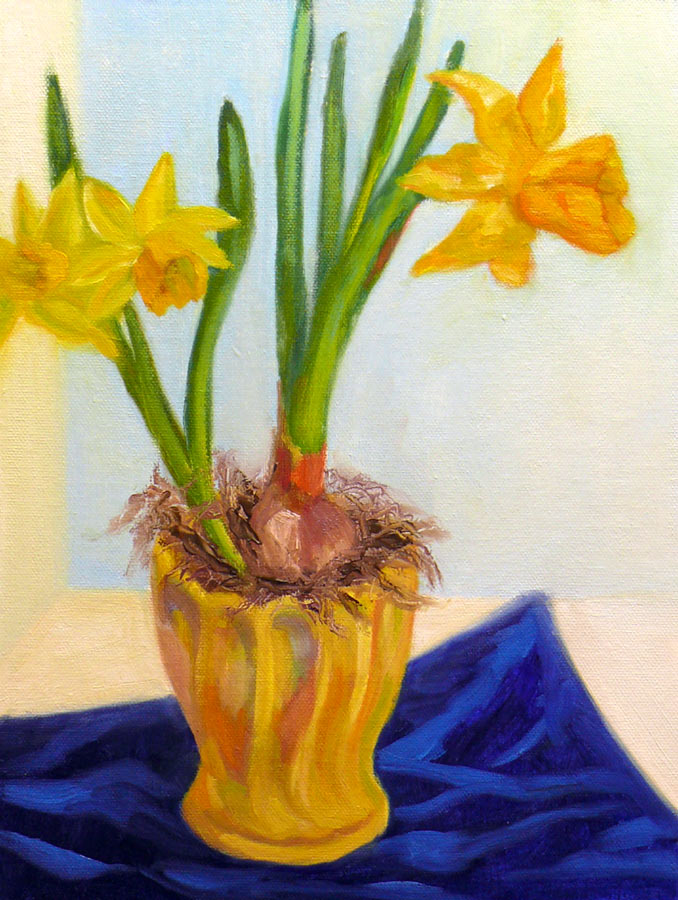
Daffodils 2 - Finished (maybe)

Oil on panel, 12 x 9″ (larger)

In between a million (well, maybe 25) other things this weekend I made another attempt at painting these daffodils from life. I don’t think I’ve nailed it yet, and was amused by how the flower on the right turned into anything but a miniature daffodil like it’s sisters on the left. It just kept growing and growing but I let it because I liked it.

There’s a lot I still need to learn and figure out (having to do especially with the effects of light but also how to set up a still life with more interesting background) but I’m happy enough with my progress. If you’d like to see the steps of painting this, click “Continue Reading” below.

Categories
Art theory Drawing Flower Art Oil Painting Painting Plants Still Life

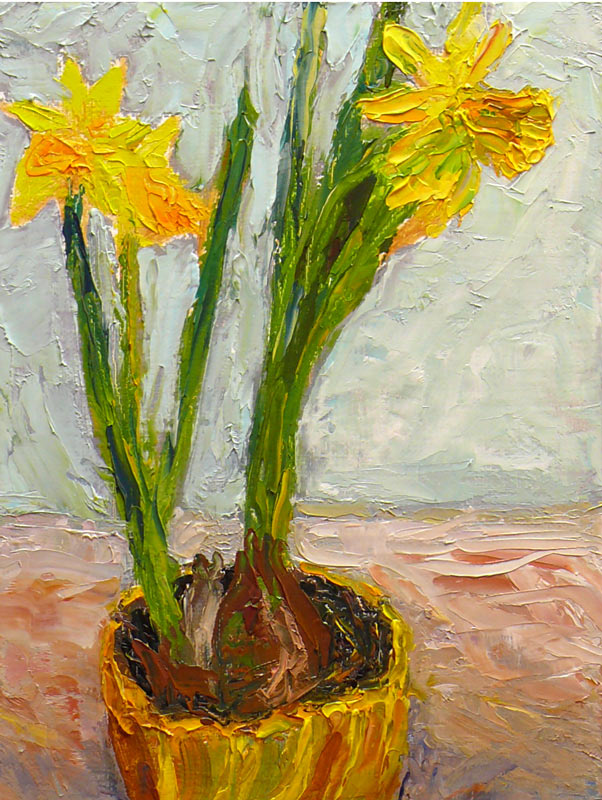
Miniature Daffodils in oil

Finished oil painting

Oil on canvas panel, 8×6″ (larger)

I’m happy to report that my computer is back up and running but I lost a couple months of email messages in the crash.
If I haven’t responded to an important message you sent me, please send it again and I’ll reply quickly.

Early last week my boss gave me this charming little pot of “Spring Brite Mini Bulb” daffodils for me. I couldn’t wait for the weekend so I could it home and paint it. I experimented with using a palette/painting knife. It’s so much fun — a lot like sketching in that you can work quickly, easily replace colors, add to them, or scrape off and re-do sections or the whole composition. It also forces you to be less concerned with details (at least at my level of skill in handling the palette knife). I used a small diamond-shaped knife for this.

Below is a progression of my steps, working backwards: (click Continue Reading to see the rest)

Categories
Oil Painting Painting Still Life

Honeydew melon in oil

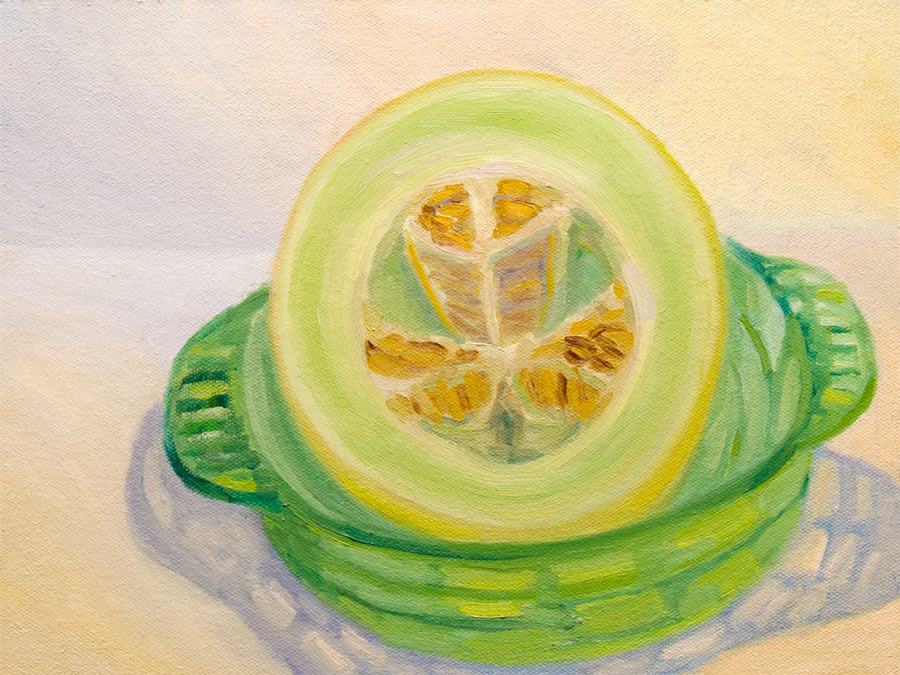
Honeydew melon in Oil

Oil on Raymar Panel, 9×12″ (larger)

I’ve been working on this painting in dribs and drabs between being sick and plein air painting all day Sunday and Monday. This poor melon wasn’t going to hang in there much longer and I’m back to work tomorrow. So tonight I gave myself an hour to finish it and I’ve called it done. It’s not great but it (and I) had a few nice moments in the process.

Now I have clean up and get ready for the work week. Next time I’ll post the great stuff I learned in class this weekend, including a color study I did today and a cheat sheet/checklist I’ve made for myself to follow while I prepare for and execute (a weird word) a painting. But not tonight because I’m off for a good night’s sleep for a change!

Categories
Animals Art theory Drawing Glass Other Art Blogs I Read Painting People Sketchbook Pages Still Life Watercolor

Debate Doodles & New Sketchbook

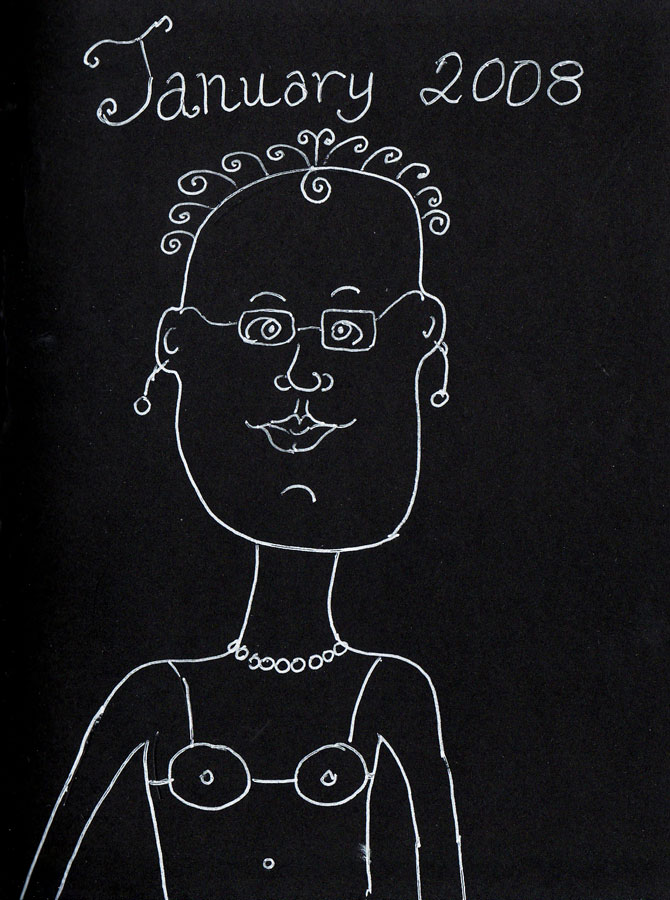
January Sketchbook Cover

White ink on black paper, 8×6″ (Larger…but why?)

(above) I was so inspired by seeing Nina Johansson‘s easy-to-make 16-page sketchbook so I made one for myself. Above is the cover drawing, inspired by a dream that I was losing my hair. That was the same dream about dating Jack Nicholson; I realized it wouldn’t work out because he probably wouldn’t be interested in dating a woman with thinning hair (let alone one over 20!).

To make the sketchbook I used one sheet of 140 pound hot-pressed paper cut into 4 strips and then folded (see Nina’s page for how it’s made; it’s very cool!) . I’m going to try 90 pound paper next time since 140 pound is pretty stiff. I punched a hole an inch from the bottom and another an inch from the top and tied the bundle together with twine.

Debate Doodles

Ink and watercolor on Fabriano Artistico hot press paper, 8×6″ (Larger)

(above) This was drawn (doodled) while watching the Republican debate last night (which I found depressing; they all seemed to be competing to show they were less caring about humanity and more militaristic than the next).

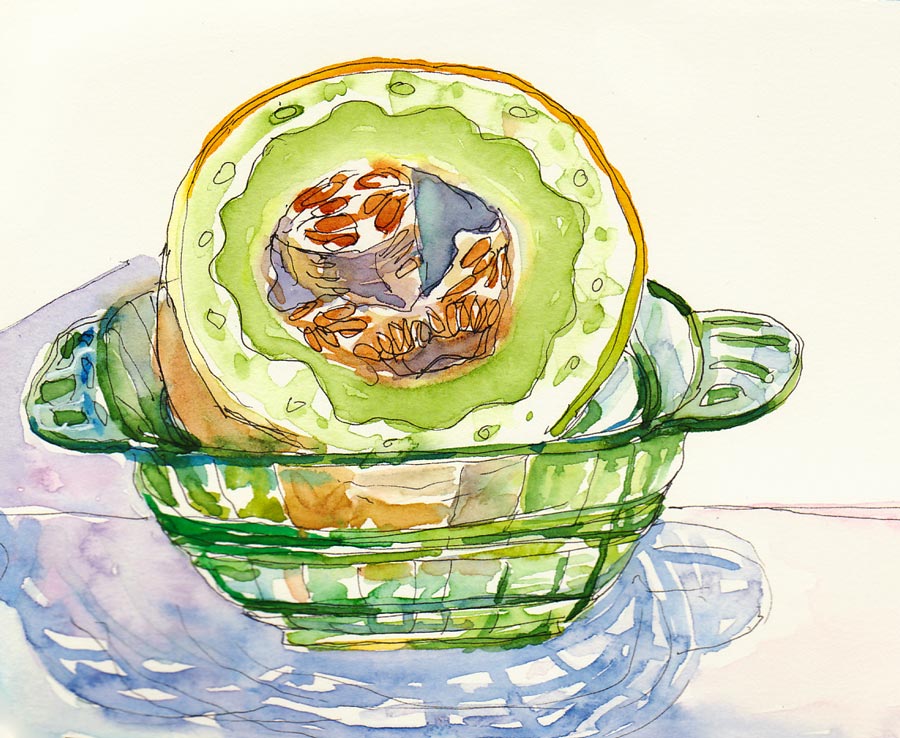
Honeydew in bowl

Ink and watercolor, on Fabriano Artistico hot press paper 8×6″(Larger)

(above) Having spent the past two days preparing a spare computer and printer to give to my neighbors, installing it at their house, setting up their internet (using the signal coming from my wireless network), going with them to Best Buy to buy a monitor and on and on, I was desperate to just have some fun in the studio. This was fun. Next I’ll do it in oils.

The art I like the most is quirky, odd, handmade rather than photographically perfect, whimsical, full of personality, nutty, imaginative. Yet I’ve always felt that I should make perfectly drawn and painted work and fought against my natural inclination to make quirky, lopsided, imperfect, nutty, playful pictures. It dawned on me this week that I don’t need to do that anymore and can be as Jana as I want (and am)! Yipppeee!

Categories
Art theory Drawing Glass Painting Sketchbook Pages Still Life Watercolor

Happy 2008! Prosperity and Art Goals

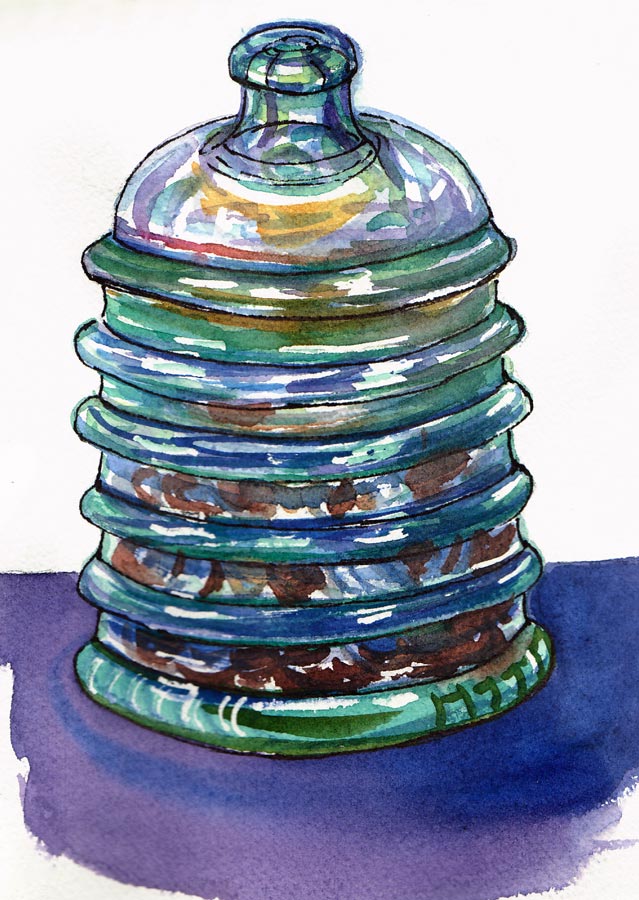
New Year 2008 - Change Jar

Ink & watercolor, 5.5 x 7.5″ (Larger)

I heard Nigela Lawson on the radio talking about New Year’s dining traditions in different cultures that all included eating round things (the shape of coins) to create prosperity in the new year. It inspired me to finally paint this former candy jar where I put the change I find in the dryer and washer after my son does his laundry at my house. The jar never fills, so I assume he also makes withdrawals.

The foods included lentils, grapes and sliced salami. One tradition said to eat 12 grapes, one for each month of the year. If the third grape was sweet it meant March would be prosperous; if it was a sour grape, March wouldn’t be good.

I’m usually more concerned with peace and health than prosperity, but after watching an insipid Suze Orman TV special about women and money last month, I decided that prosperity would be nice too. She emphasized that women often feel they have to apologize for having money, or feel guilty if they are have anything for themselves before everyone else has their needs met.

But of course the key to prosperity is very simple:

Want what you have; Don’t want what you don’t have

Easier said than done, especially in the U.S. where overconsumption is considered to be patriotic.

Art Goals

My art goals for 2008 are also very simple: to enjoy myself by exploring whatever directions I find interesting, challenging, exciting, pleasurable, fun. In other words, learn, practice, grow, but do it in ways that are good for me, that are satisfying and healthy. No lists of shoulds, no rules other than play, practice and enjoy the journey. Be prosperous in the pleasure and enjoyment of the process.

My hope is that by this time next year I will have earned enough competence with oils that I can comfortably and freely work in the medium most fitting to the subject or idea I want to express, whether it be ink, watercolor, oils, goauche, or monoprint.

Categories
Oil Painting Painting Still Life

Christmas Citrus & Saint Nicholas

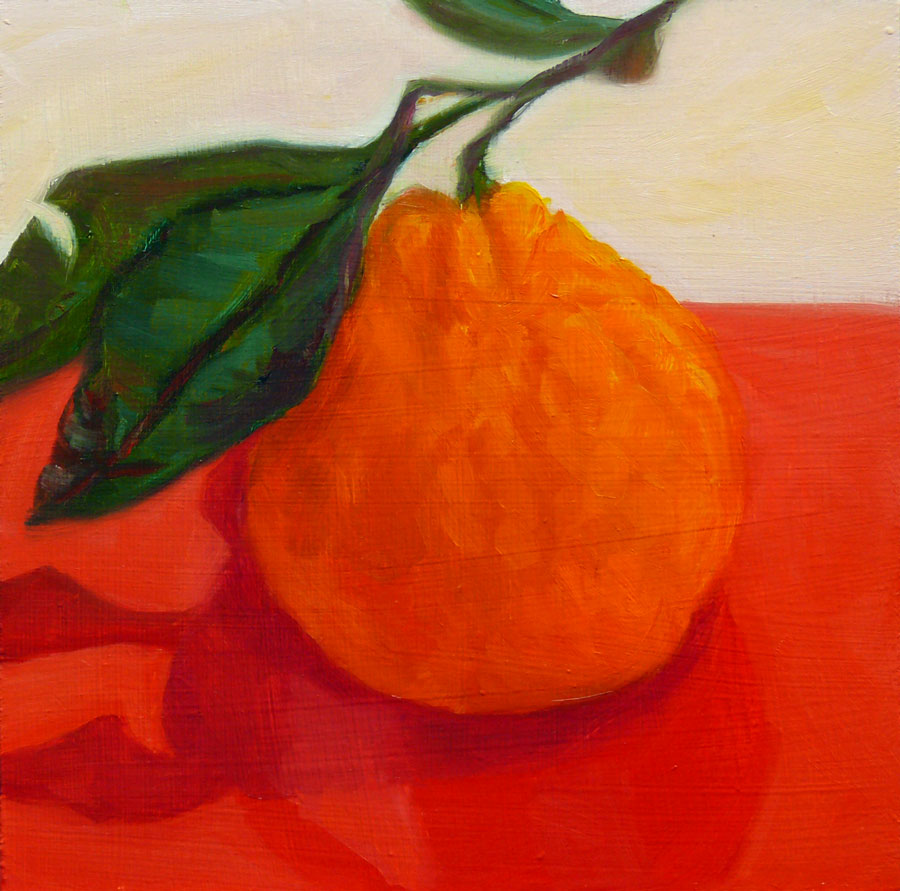
Christmas Tangerine

Oil on masonite panel, 6″x6″ (Larger)

Although I personally don’t celebrate Christmas, I thought a bright orange tangerine would be a fitting tribute to the day (see below about the tradition of oranges and tangerines as stocking stuffers).

My sons and my dear friends and family are all with their significant others and families and knowing they’re all having a lovely Christmas day, I’m exactly where I want to be: in the studio.

I hope you too are safe, warm and happy today, whether you celebrate Christmas or not!

St. Nicholas traditions in America

Immigrants brought St. Nicholas holiday traditions to the United States. Over time these have melded into some common practices.

StockingsChristmas stockings by the fireplace
And the stockings were hung by the chimney with care in hopes that St. Nicholas soon would be there, goes the oft repeated Christmas rhyme. In the story of Nicholas rescuing the poor maidens from being sold into slavery, the gold dowry money, tossed in through the window, is said to have landed in stockings left to dry before the fire.

OrangeOrange or tangerine in the toe of filled Christmas stockings
The gold Nicholas threw to provide the dowry money is often shown as gold balls. These are symbolized by oranges or even apples. So the orange in the toe of the stocking is a reminder of Nicholas’ gift.

Categories
Oil Painting Painting Sketchbook Pages Still Life Watercolor

What is a Persimmon?

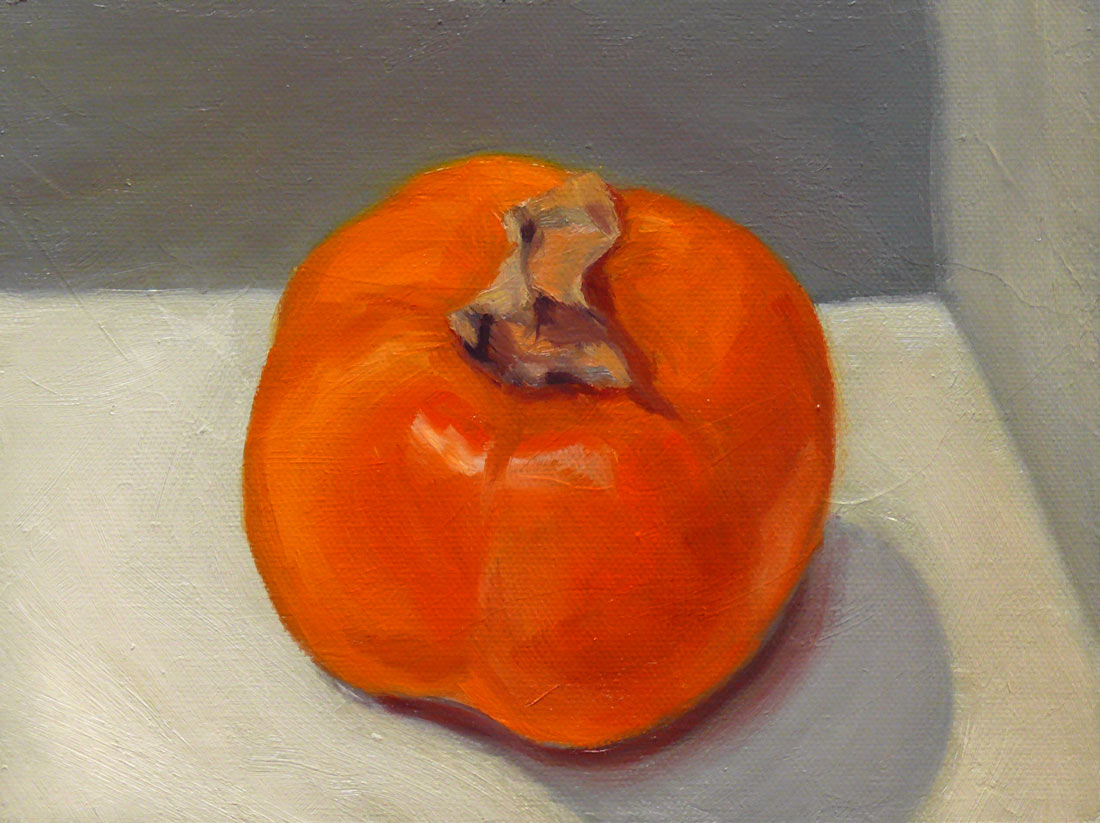
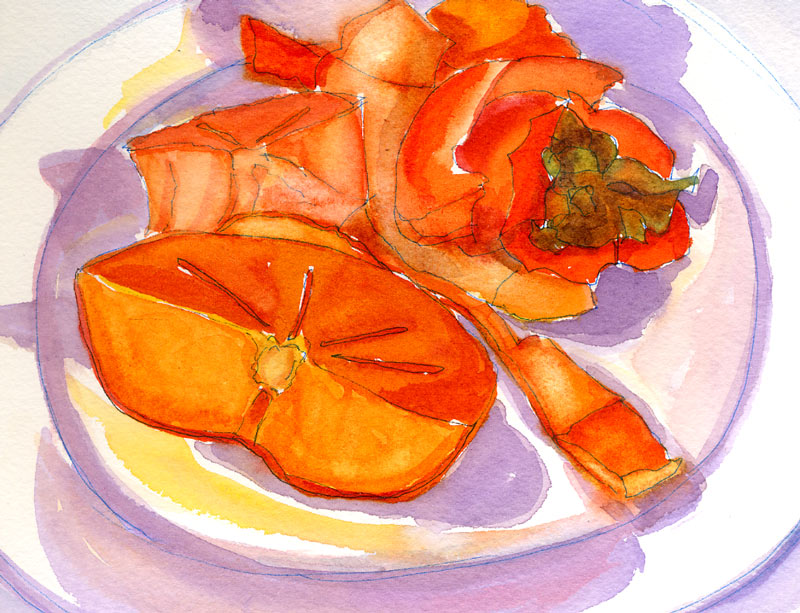
What is a Persimmon #2 (oils)

Oil on panel, 6″x8″ (Larger)
(painted on top of a small plein air landscape that didn’t work)

At my favorite little produce market, Colusa Foods in Kensington, I asked one of the expert produce guys which fruits were good right now. He recommended Satsuma tangerines and Persimmons. I’d never eaten either of these fruits and decided to give them a try. The tangerine was amazingly delicious, tasting like childhood favorites Creamsicles (orange popsicles filled with vanilla ice cream) and Orange Julius (an orange-flavored milkshake). But the persimmon perplexed me.

What is a Persimmon #1 (watercolor)

Watercolor on cold pressed paper, 5″x7″ (Larger)

I’d never eaten a persimmon before, didn’t know how to spell it let alone how it should be eaten or what it would taste like. Of course I checked the internet and learned that one peels it and then eats the inside. From what I read it sounded like the inside might be mushy, which didn’t sound too appealing but it felt pretty hard from the outside. I had no idea what I’d find when I cut into it. I decided to make it an adventure, first doing some paintings of the persimmon whole (above in oils and watercolor) and then painting the cut open fruit.

What is a Persimmon #3 (watercolor)

Watercolor on cold pressed paper, 5″x7″ (Larger)

I cut the top off, per the instructions I found and then cut it down the middle, hoping for a pretty seed pattern. Unfortunately I cut it on the wrong middle and the only thing visible was a faint line down the center. So I cut it in half the other way and discovered a beautiful sand dollar sort of design. But since I’d cut it the other way first I didn’t think it would make a great composition so I decided to eat one of the quarters. YUM!!!! It was sweet and crunchy and different — a new taste entirely! The only way I can describe is that it tastes happy and bright. I just ate the last quarter, leaving the skin on, and that was OK too–more like eating an apple only better. Wowee.

Categories
Flower Art Painting Published work Sketchbook Pages Still Life Watercolor

My art in the book!

I'm in the book!

The Watercolor Flower Artist’s Bible: An essential reference for the practicing artist (link to Amazon for more info)

Last December I received an invitation from an editor at Quarto Publishing in London to submit photos of my watercolor flower paintings for publication in an upcoming book. At first I ignored the message because I assumed it was the kind of spam email I get regularly inviting the artist [to pay] to be in a show or a book. Just before the submission deadline I did some investigation and discovered they are a good publisher and that I actually owned another of their books. I submitted files of my photos and scans of five paintings.

That editor’s editor approved the photos for inclusion and they asked me to write about my process, goals, focus, techniques, etc. for each painting which I did. Then I waited. I was promised only a copy of the book and good publicity in exchange for their right to publish the art in their book.

I got the book this week and was so excited! Not only did they do a really nice job with my artwork and the descriptions, but it’s a really good and comprehensive book on flower painting in watercolor. The most exciting part for me is that I’m sharing the pages of a book with some truly amazing artists, including one of my favorites, Lucy Willis, who has published several wonderful books (that I own and treasure) on watercolor painting, seeing and painting light, and travel painting.

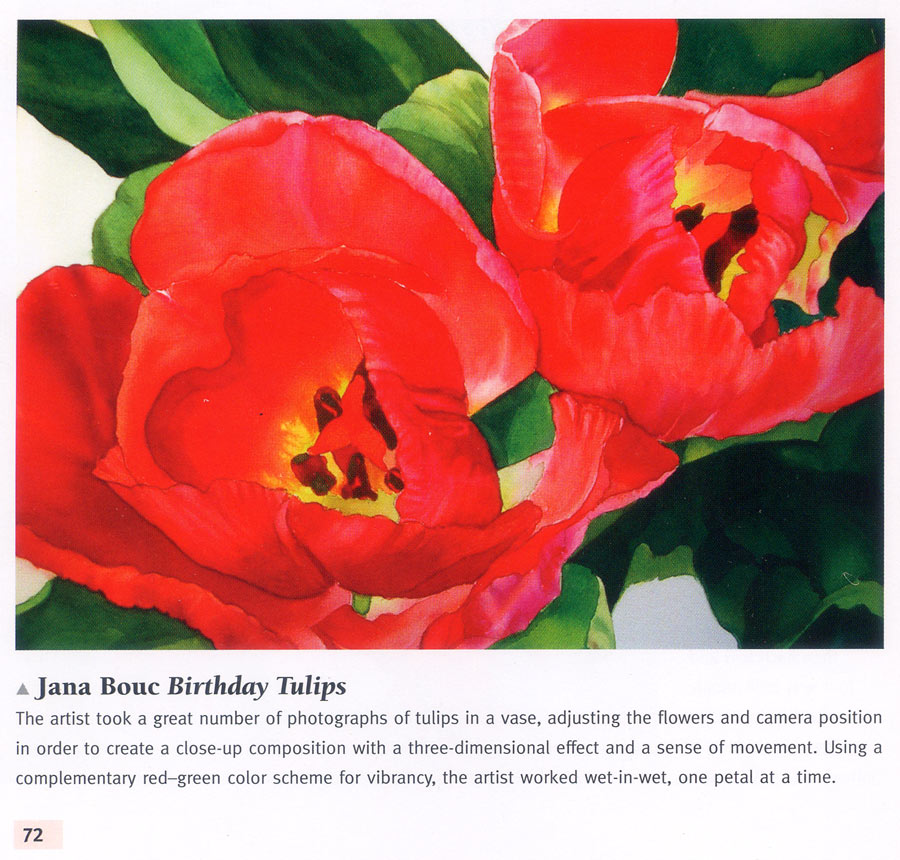
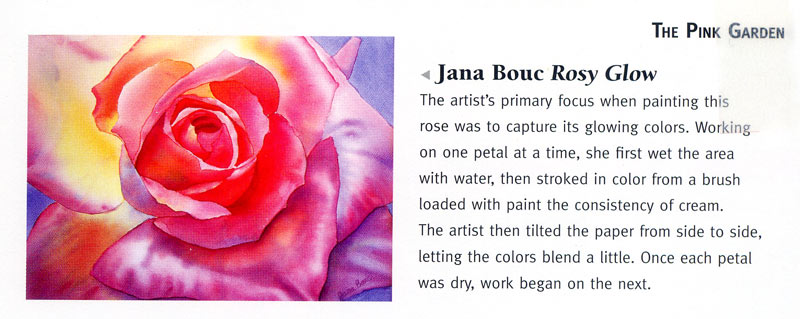
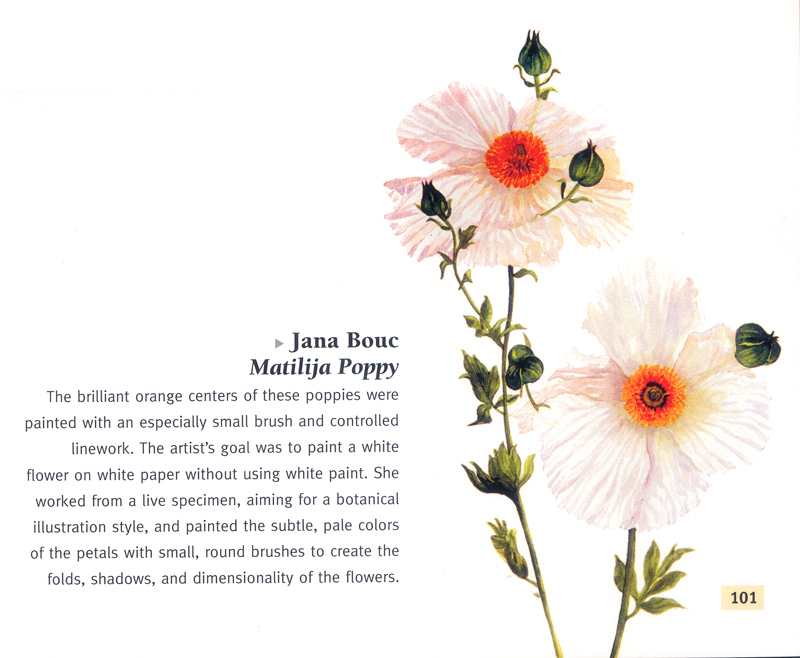
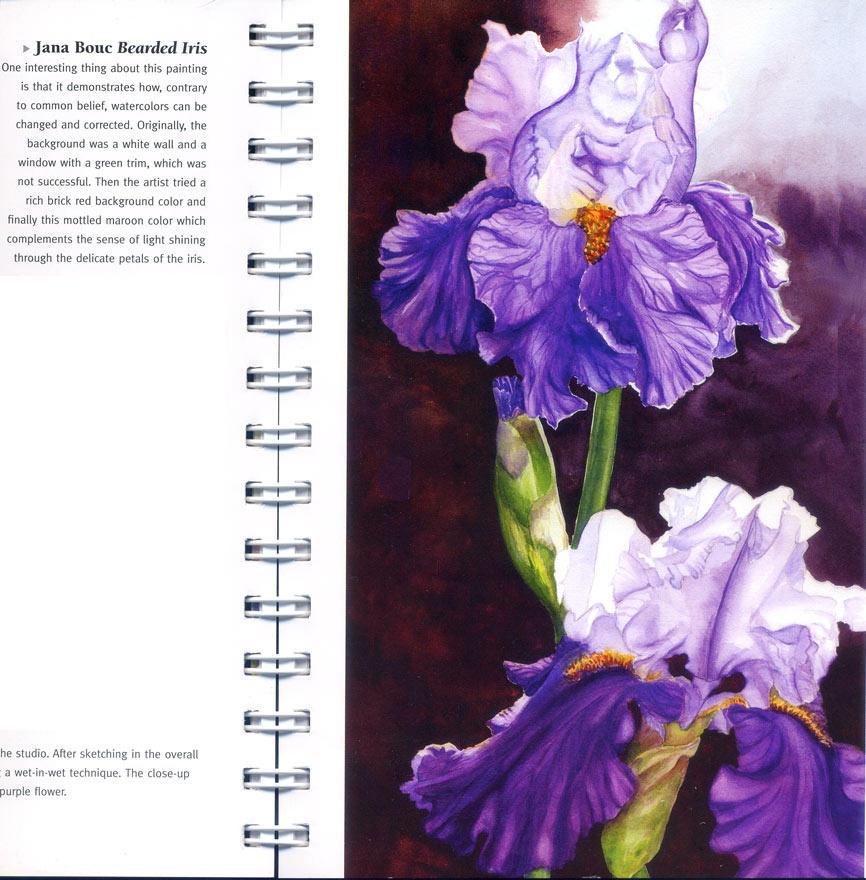
My artwork can be found on pages 72, 85, 86, 101, and 152. Here are my chunks of those pages:

My tulips in the Watercolor Flower Artist's Bible
Larger

My rose in the Watercolor Flower Artist's Bible
Larger

My rose and bottle in the Watercolor Flower Artist's Bible
Larger

My poppies in the Watercolor Flower Artist's Bible
Larger

My irises in the Watercolor Flower Artist's Bible
Larger

Categories
Life in general Painting Sketchbook Pages Still Life Watercolor

Organic Bananas, The FURminator & Blindness

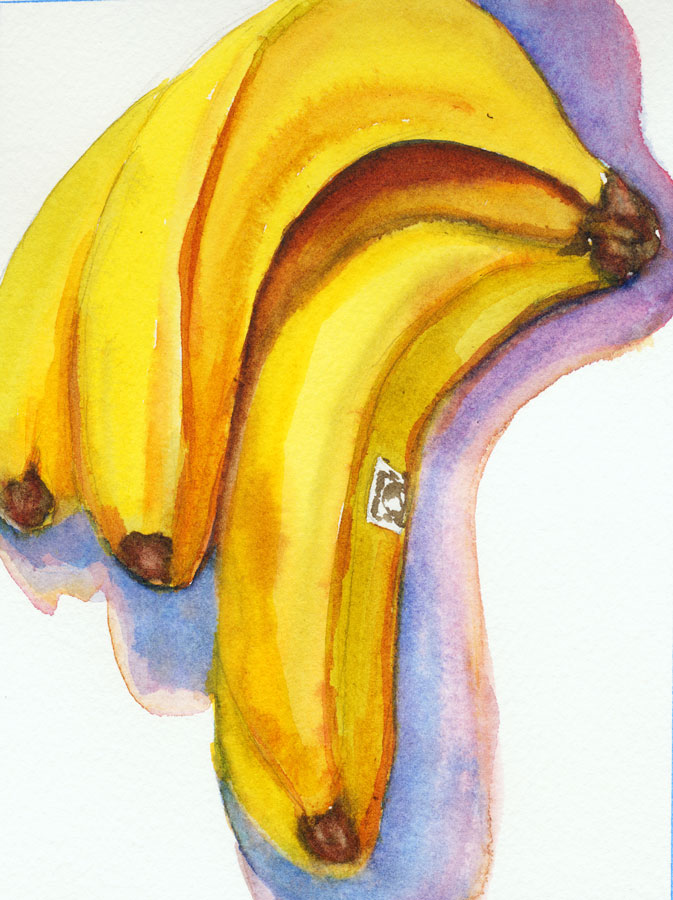
Organic Bananas

Watercolor on Arches Cold-Pressed paper in 5.5 x 7.5 sketchbook
Larger

After working half the day I decided to finally vacuum my house since I was feeling sleepy and not particular creative and the house and studio sorely needed cleaning. I’ve been contentedly choosing painting over housecleaning for too long, and the cat hair was piling up. So I dusted, vacuumed, washed the throw rugs, brushed the kitties with a great new cat and dog brush, the FURminator, that thoroughly removes the undercoat and ends shedding for weeks (the pictures on their website don’t lie–it’s amazing how much fur comes off the first time).

After dinner I was still sleepy but knew I’d be sad if I just turned on the TV and had no fun in the studio at all today. So I grabbed the only produce left in the kitchen (I’ve also been putting off the grocery shopping) and painted these bananas.

While I painted I was listening to a fascinating book, Crashing Through, about a man who was blinded at the age of 3, became a downhill speed skier, an entrepeneur, married, had kids, and a great life. Then he was given the historical opportunity to try an experimental surgery and become one of only 20 people in the history of the world who, after a lifetime of total blindness, had his sight restored, via a stem cell and corneal transplant. The book provides really interesting information about vision and how we make sense of what we see, from distance perception, to 3-dimensionality, to recognizing faces and expressions. It turns out it actually has to do with parts of the brain rather than the eyes and is learned in infancy.

A lot of that information is useful for painting. When the author explains how the brain uses visual clues to judge distance, these are the same things artists use to create the illusion of depth and distance in paintings. These include objects getting smaller the further away they are, closeness to the horizon (the further away or taller something is, the closer to the horizon it is), aerial perspective (the effect of moisture and particles in the air between the distant object and the viewer that causes distant objects to appear grayer, cooler, paler than closer objects), linear perspective, and occlusion (one thing in front of another).

Categories
Art theory Glass Oil Painting Painting Still Life

Conscious Competence?

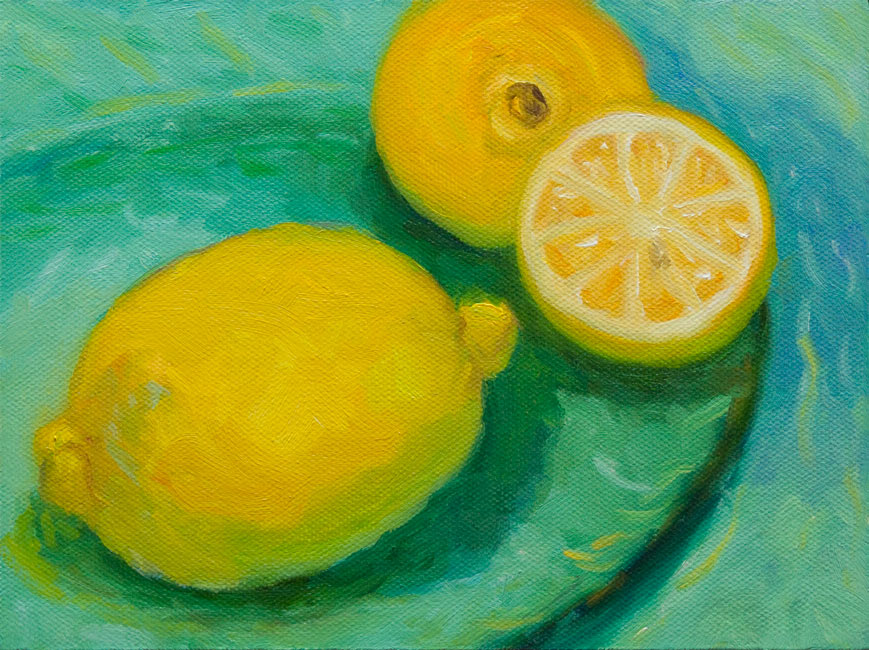
Lemons on Green Glass Platter

Oil on canvas panel, 8×6″
Larger

I think I’m finally making a little progress with my oil painting. I’m starting to understand about color temperature and how to make transparent darks (which you absolutely have to protect just like the white of the paper in watercolor). I couldn’t figure out how to get the little highlights on these lemons but maybe I have to wait for the paint to dry and then use a dry brush to sweep across it. Or maybe I could do it with a knife? I tried painting it on with a brush but just kept smearing and muddying the paint. Any suggestions?

In July, I did these lemons on a different green glass plate and …

Lemon on green glass plate (P1010468)
Larger

…I think I see some progress.

My friend Judith told me about a learning theory that divides the stages of learning into four stages:

  1. Unconscious incompetence .(You don’t know how much you don’t know and sometimes have beginner’s luck that makes it seem like it will be easy to learn).
  2. Conscious incompetence. (Now you’ve realized how much you don’t know and how bad you are at the thing you’re trying to learn, and how many people are way ahead of you. You may have the knowledge or information about HOW to do something but not the skill to do it.)  A lot of people give up at this point. This is where I’ve been for past couple months.
  3. Conscious competence. (You understand how to do it, you’ve practiced and built some skill, but it doesn’t come naturally. You have to think through each step but you can do it and a basic level.)
  4. Unconscious competence. (It just comes naturally and you don’t have to constantly think through each step.)

Mom was half-right when she said “practice makes perfect.” I know that when I strive for “perfect” I only end up miserable. I think the saying should be “Practice makes Progress” and right now progress feels great after being mired in Conscious Incompetence for months!