Categories
Art theory Dreams Faces Oil Painting Other Art Blogs I Read Painting People Photos Portrait Studio

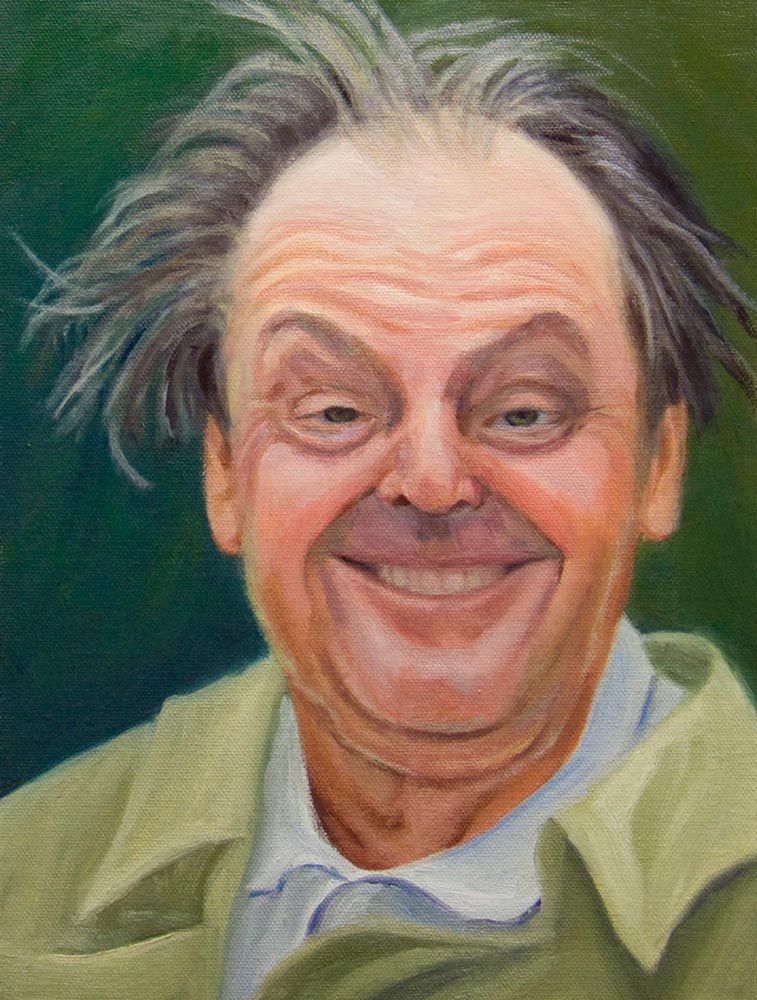
Dreamt about Jack Nicholson so I painted him

Oil on canvas panel, 12×9″ (Larger)

I had a fun dream that I was on a date with Jack Nicholson so the next day I decided to paint his portrait. (I wouldn’t really want to date him–I think he’s scary but fascinating.) I downloaded some photos from the web, picked this one and set it up on my computer monitor.

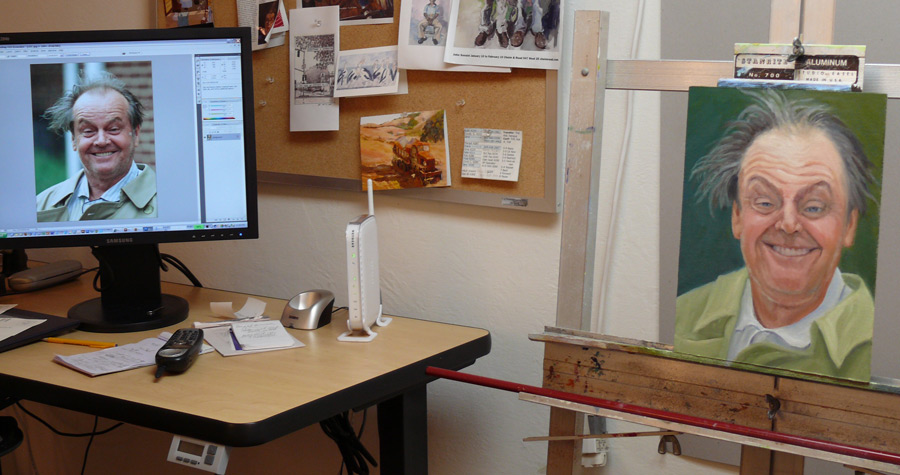
In Photoshop I cropped the photo to 12″x9″ to make it the same proportions as my canvas and then set Photoshop’s grid to divided the image into thirds. Then with charcoal I drew the same grid on my canvas panel (dividing it into 9 rectangles). That made it easier to correctly sketch in the shapes that make up the face.

Here’s the set up with the painting nearly done. It so great to be able to work from the monitor instead of a printed photo though it still can’t compare to working from life:
Jack Nicholson portrait in progress
(Larger) (Alison and Pete your artwork is visible on my bulletin board, along with some other inspiring artists’ work)

When I thought I was done, I looked at both images in a mirror and saw a bunch of problems that needed fixing. I flipped the photo 180 degrees in Photoshop and turned the painting upside down too. That made it easier to spot and corrent problems as shapes instead of facial features which is harder. I wasn’t going for a perfect finished portrait, but rather was trying to have fun and continue practicing with oils.

While I was working was listening to a historical novel about Pierre-Auguste Renoir and the making of his famous painting, Luncheon of the Boating Party (my favorite impressionist painting of all time–it made me cry when I saw it in person). I’m enjoying Susan Vreeland’s book of the same name, but I can’t imagine a non-artist enjoying it as much, since it goes into great detail about colors, composition, art theory, and the struggles and joys of painting from life.

Here are a couple of great quotes by Renoir that I really loved:

“I always paint from life and never paint anything I don’t enjoy.”

“I make it a rule never to paint except out of pleasure.”

Categories
Animals Art theory Landscape Oil Painting Outdoors/Landscape Painting Plein Air

Point Isabel Dog Park & a painting breakthrough

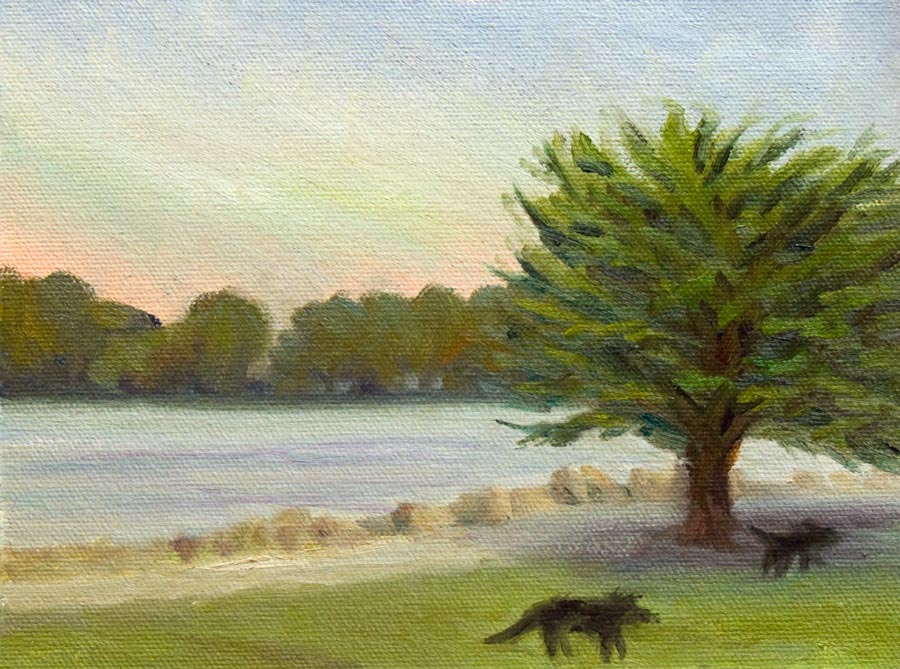
Point Isabel Dog Park Plein Air

Oil on canvas panel, 6″x8″ (Larger)

We’re expecting a series of big storms for the next week but the weather today was comfortable, no wind and in the 50s. Although I’ve been working on another painting and wanted to keep going on it, I couldn’t resist the opportunity to get outside and paint before the storm hits.

I headed down to nearby Pt. Isabel, an enormous park along the bay that is designated as an off-leash dog park. It has spectacular views of the Golden Gate Bridge but smog, fog and clouds made the visibility so bad that I picked a closer view.

I’m really excited about the breakthrough I had yesterday with oil painting, and how I was able to apply it to this little painting. Up until yesterday I’d been using various oil painting mediums to thin the paint and what I kept ending up with was thin, washed out, chalky, greyed, paint; stickiness and smell from alkyd mediums and smell (and toxins) from turpentine. I’d heard people say they used little to no medium and I couldn’t understand how that was possible. It seemed like the paint would be too thick and hard to manipulate without first thinning it down.

I finally tried it and was shocked to discover it works! Of course it means using a lot more paint, especially on this coarser canvas, but I was able to put down one layer of paint, and leave it. If I made a mistake I could scrape the paint off of that section and repaint it, no problem. Before when I tried to do that, there wasn’t really anything to scrape off because my paint was sooooo thin.

I did this painting in about an hour. I know the dogs look a little dorky, but it’s just a little oil sketch, so who cares. Then I was able to go home and continue working on the painting in progress in my studio. That painting is almost finished and I’m just so excited that after all the work and study I’ve put into oil painting it at last feels as if I’m getting somewhere. And I still have 5 more days of vacation!

Categories
Art theory Landscape Oil Painting Outdoors/Landscape Painting Plein Air Sketchbook Pages

Learning to Stop (making ugly paintings)

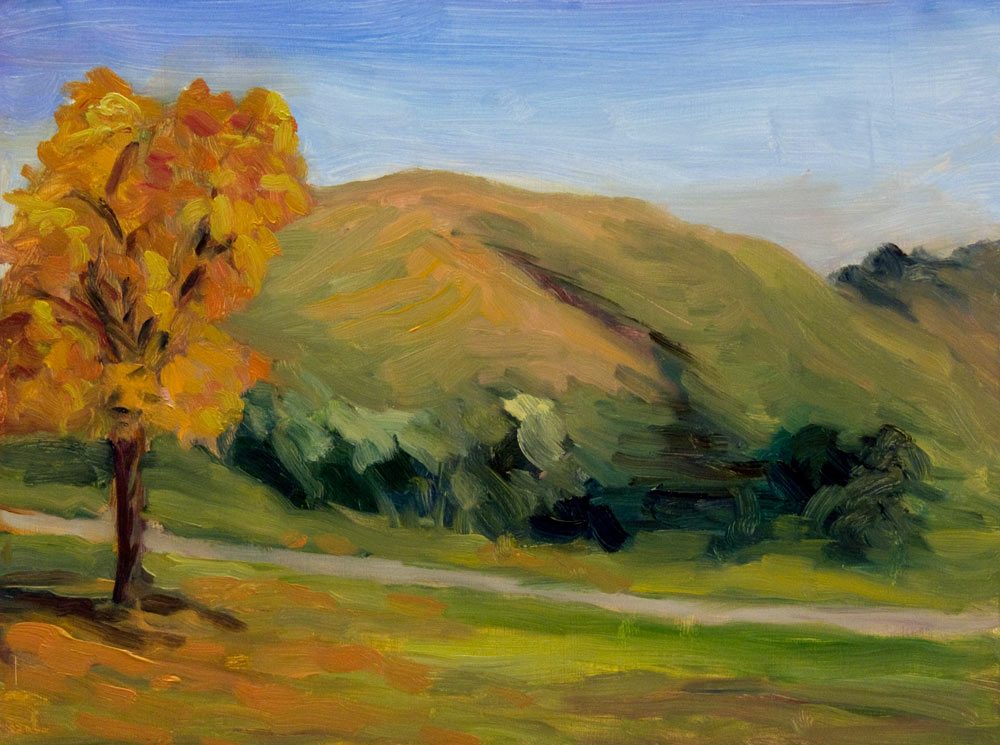
Plein Air - untouched in studio

Oil on canvas panel, 9×12″ (Larger)

The painting above is not great, but it’s loose and free and painted plein air with no touching up in the studio.

I’ve been painting and repainting the formerly plein air painting below over the past few days and it’s been both a good learning experience and discouraging. Mostly what I’ve learned is NOT to (re)do it. When I try to “just fix one little thing” I end up working for hours (days in this case), completely losing the freshness of the original plein air painting and, at the end of the day, finding myself right back where I started from, with dull, overworked paint.

This is the final version and I hereby VOW to not touch it again (other than to throw it in the trash!) I thought I vowed that yesterday and yet today I found myself trying one more time:

Briones again...the end

At several points in the process I had a good painting but just kept on fixing one more little thing until…well…it’s like scratching mosquito bites…I just keep scratching at until it bleeds and then I’m sorry. The original before messing with it appeared on my easel in my post about my studio here (first photo).

This was yesterday’s version:

Plein  Air - finished in studio

Part of the problem with retouching in the studio is that the reference photos rarely capture the colors and memories of the scene. This one sure didn’t and yet I continued to work from it and wondered why everything looked so dull!
Briones photo ref

(above: the bad reference photo)

Photoshopped photo reference

(Above) I even tried painting over the reference photo in Photoshop to try to use that as reference instead but I still ended up with mud.

So here’s what I’ve learned (AGAIN!):

  1. Stop! Don’t waste time. Make progress by painting more paintings not the same one over and over
  2. Use more paint and less medium.
  3. Mix the right color, put it down and leave it alone.
  4. Messing with a hopeless painting forever is not art, it’s OCD (obsessive-compulsive disorder). I need a painting alarm like those car alarms that say, “Step away from the painting…” or a Sister Mary Catherine to smack my knuckles with a ruler and snatch the canvas away from me…
Categories
Landscape Oil Painting Outdoors/Landscape Painting Plein Air

Benicia Plein Air Sketch and the Goose Lady

Benicia Plein Air

Oil on canvas panel, 9×12″ (Larger)
Painted plein air

Last weekend the two plein air groups I belong to combined and met at Matthew Turner Park in Benicia on San Pablo Bay. It was a gorgeous, sunny crisp day and a nice switch to be meeting in the afternoon instead of first thing in the morning.

There were a number of odd characters around entertaining us. A middle-aged woman sat in her car nearby us calling her dog (“Dog…dog…come here dog!”). Except there were no dogs anywhere in sight. There were lots of geese though, including one that seemed to be wearing a white, ruffled feather tu-tu.

She kept up her patter and eventually the geese wandered over to her car. For the next couple hours she barked commands at the geese, still calling them “Dog.” She lectured them about being too greedy, warned them they better start sharing nicely, and threatened to leave if they didn’t behave. It reminded me of when my parents used to threaten my sister and I when they were driving and we were misbehaving in the back seat, “If you don’t stop it I’ll pull over and give you both a spanking!”)

Then a man with a grey ponytail arrived and started talking to the geese and feeding them too. He claimed to know each of their names and their histories. The geese were apparently used to this treatment and were quite demanding, pecking at the feet of some of the artists when we first arrived before their benefactors got there.

I’d planned to finish and touch up this painting in the studio, but I’ve learned my lesson. After wasting the past few days trying to “finish” another plein air painting, I’ve decided to leave plein air sketches alone. I’ll make another post about that tomorrow with before and after pics.

Categories
Oil Painting Painting Still Life

Christmas Citrus & Saint Nicholas

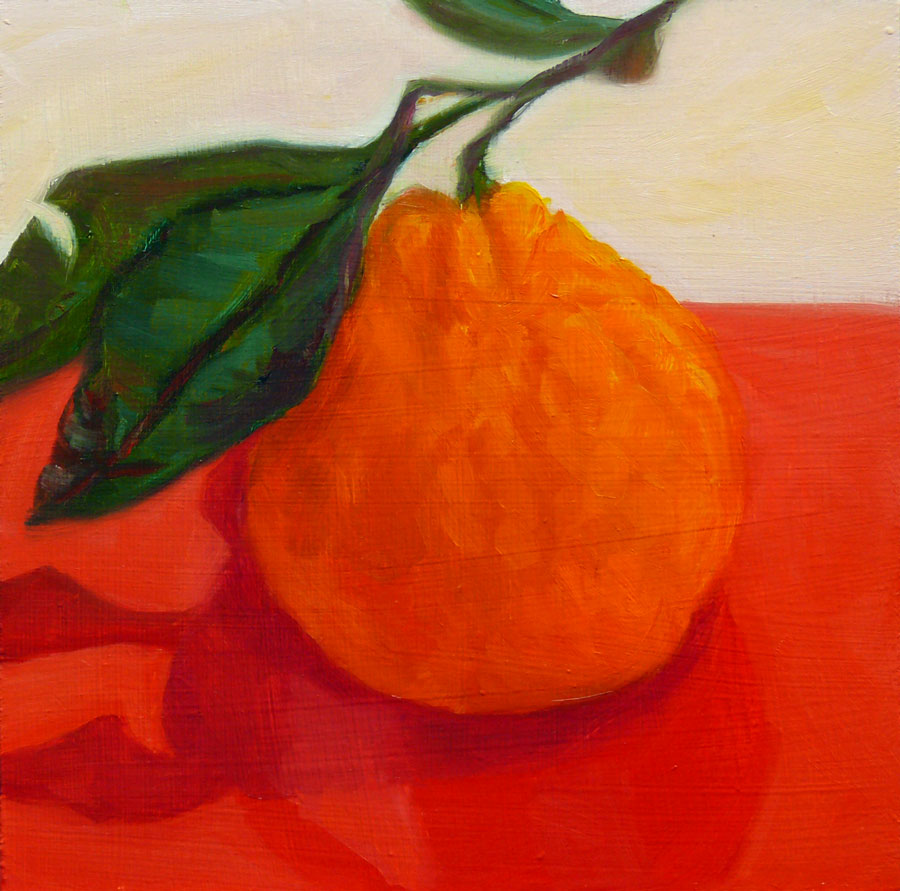
Christmas Tangerine

Oil on masonite panel, 6″x6″ (Larger)

Although I personally don’t celebrate Christmas, I thought a bright orange tangerine would be a fitting tribute to the day (see below about the tradition of oranges and tangerines as stocking stuffers).

My sons and my dear friends and family are all with their significant others and families and knowing they’re all having a lovely Christmas day, I’m exactly where I want to be: in the studio.

I hope you too are safe, warm and happy today, whether you celebrate Christmas or not!

St. Nicholas traditions in America

Immigrants brought St. Nicholas holiday traditions to the United States. Over time these have melded into some common practices.

StockingsChristmas stockings by the fireplace
And the stockings were hung by the chimney with care in hopes that St. Nicholas soon would be there, goes the oft repeated Christmas rhyme. In the story of Nicholas rescuing the poor maidens from being sold into slavery, the gold dowry money, tossed in through the window, is said to have landed in stockings left to dry before the fire.

OrangeOrange or tangerine in the toe of filled Christmas stockings
The gold Nicholas threw to provide the dowry money is often shown as gold balls. These are symbolized by oranges or even apples. So the orange in the toe of the stocking is a reminder of Nicholas’ gift.

Categories
Landscape Oil Painting Painting

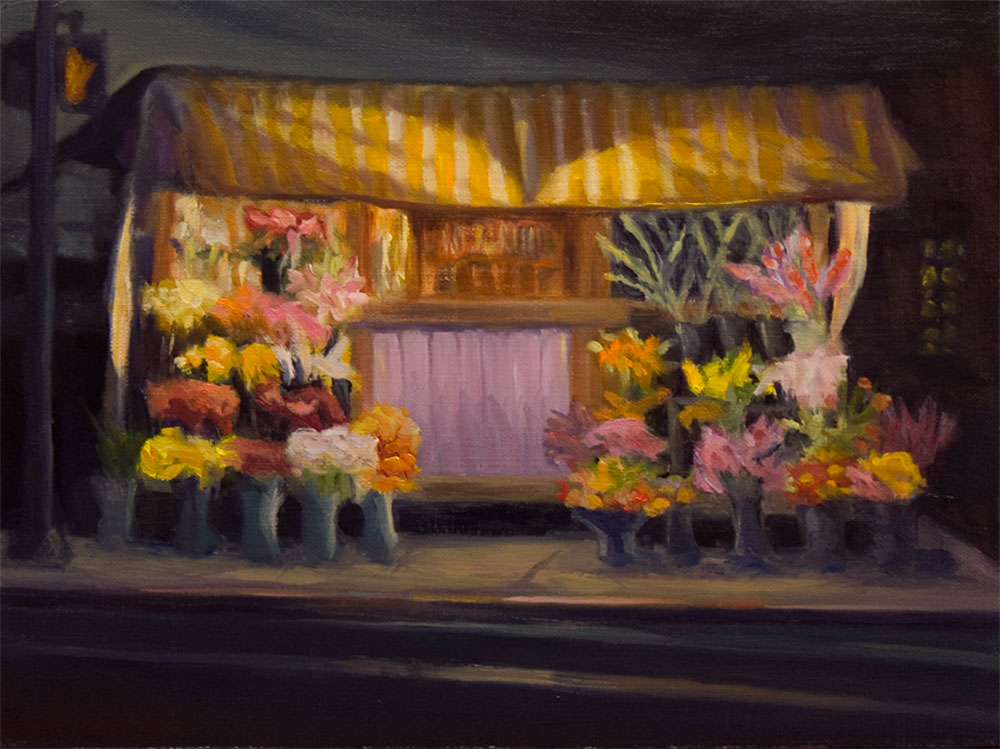
Flower Stand at Night in Oils

Oils

Oil on panel, 9″x12″ (larger)

This is the same scene I did a few days ago in watercolor last week. I’m not sure if I’m done or not, but it’s time to set it aside and give it a week to see what if anything is still needed. It’s interesting how much better I like it when viewing it from a few feet away instead of a close up view like this.

Several times today I thought I was nearly done and then took a break, sitting in a chair across the room with a notepad, writing down all the little things I spotted that needed adjusting and then went back to the painting and checked them all off.

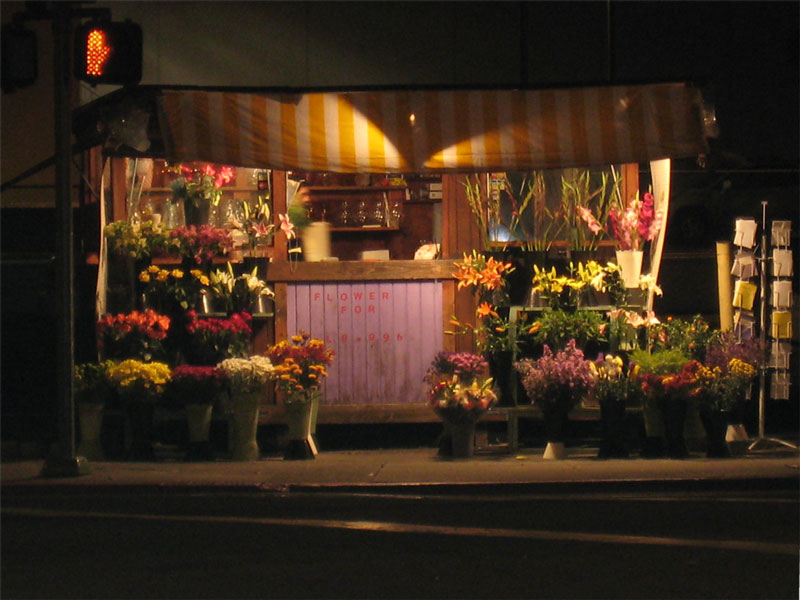
Here’s the original photo reference I took the night before Thanksgiving:
Photo reference for Night Flowerstand
Photo (Larger)

I also got out and did some plein air painting with Elio‘s class on Sunday. He seems to be charmed as we have had no rain on Sundays now for three months of classes…or maybe it’s global warming? But it is pretty amazing being out painting in a sunny meadow in the middle of December. I dug out my longjohns and gloves from my skiing days and a Lifa turtle neck from my sailing days and dressed in several layers, which worked just fine in the mid-50 degree weather. Now if I can just get all the mud out of the crevices in my boots!

Categories
Landscape Oil Painting Outdoors/Landscape Painting Plein Air

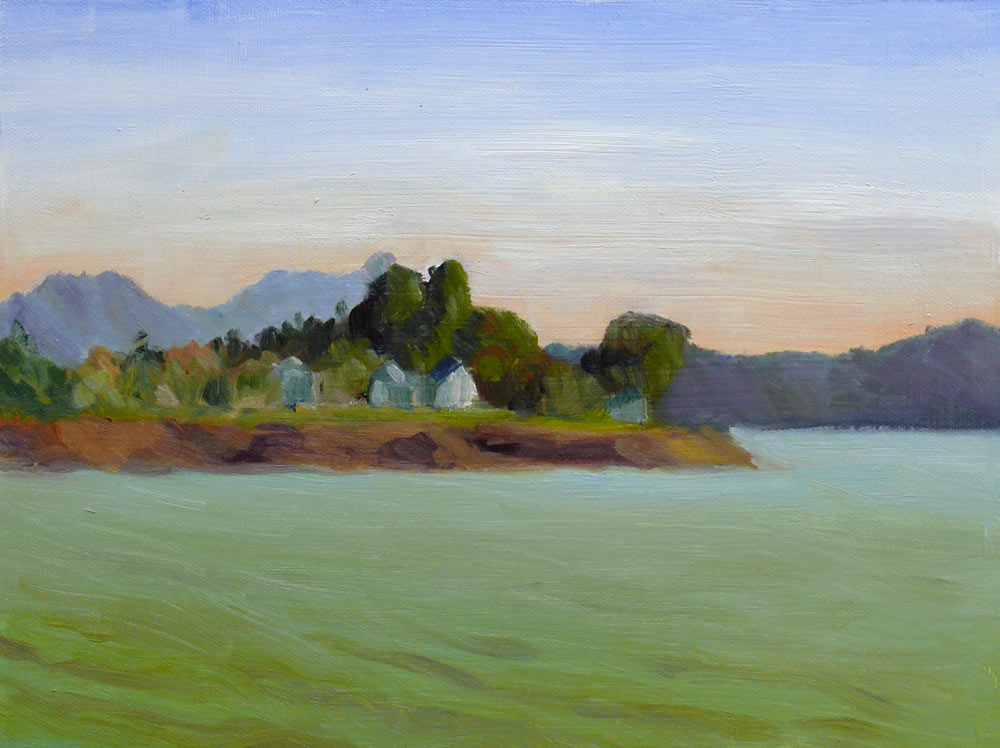
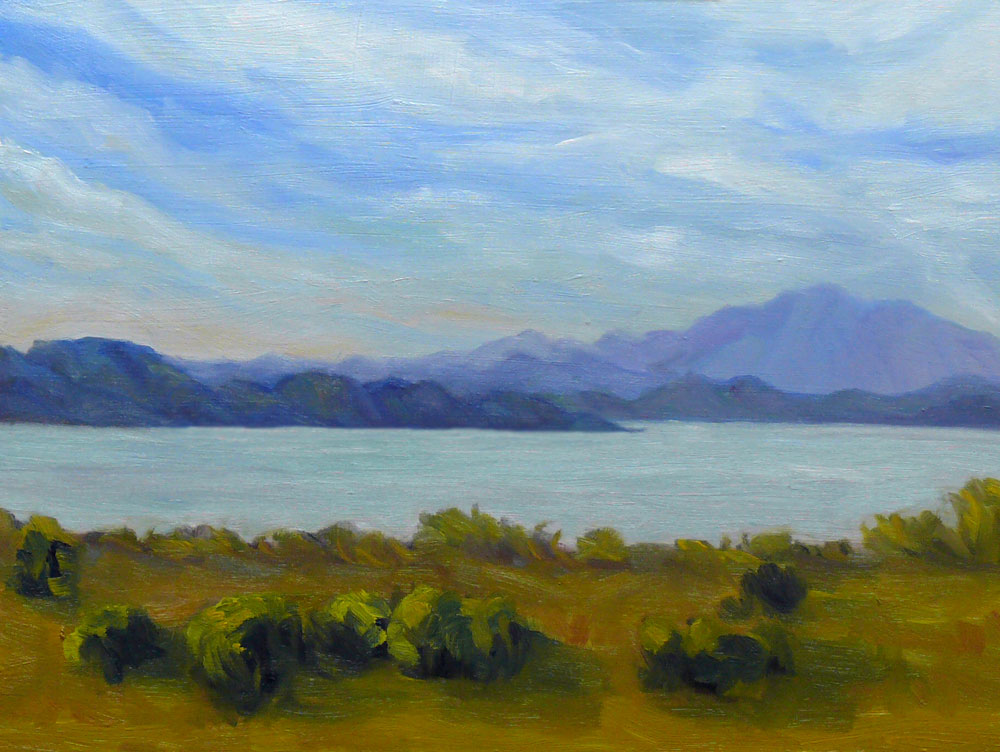
View of Mt. Tamalpais from Pt. Pinole


Oil on canvas panel, 9″x12″
(Larger)

I started this painting at Point Pinole last month but it had so many problems that I put it aside and never posted it. Today I decided to give it a do-over. It was either that or reclaim the panel by covering it in gray paint and using it for another painting.

When I compared my photo of the scene to my painting I could see how far off I really was — I’d both enlarged and shrunk the scene and painted distant details I couldn’t really see. So I did some redrawing, repainting, and I’m happy with the progress I’ve made and the understanding I’ve gained since the first version.

Of course there’s a huge difference in the level of difficulty between painting in the studio vs. painting plein air where the day’s changing light makes the scene change constantly. Even so, I’m missing painting outdoors and have vowed to get out there again next weekend, no matter what the weather. I wimped out this weekend while we were having a cold snap (for the SF Bay Area — frost in the morning and then temps in the low 50s during the day).

Categories
Art theory Oil Painting Painting People Portrait

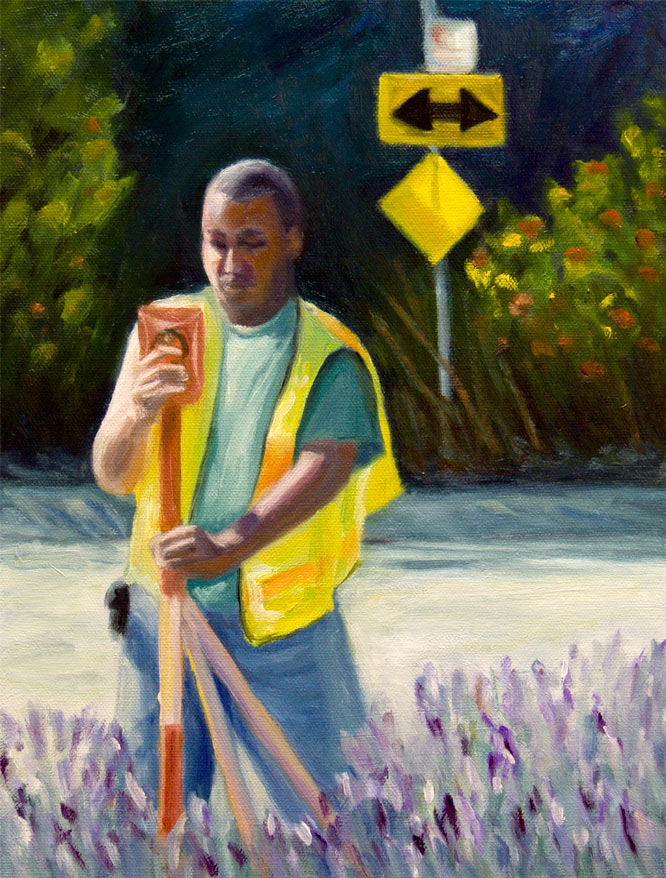
Surveyor Again

Oil on canvas panel, 12″ x 9″ (Larger)

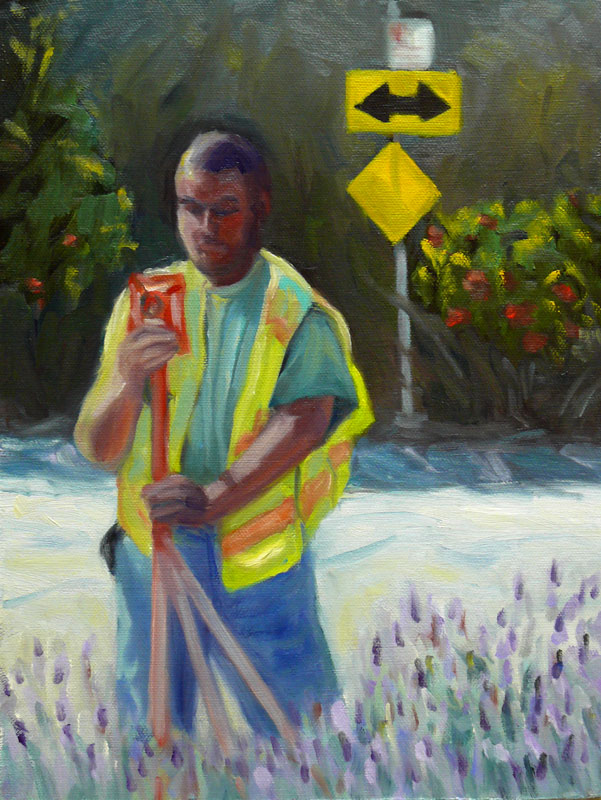
I wasn’t satisfied with the way this painting turned out the first time I declared it done so I worked on him again. I fixed some drawing problems (as much as they could be fixed this far along), lightened the street, darkened the background and the street signs, and worked on his face again. It’s not perfect but it’s enough better that it won’t keep bugging me to finish. Now I can move on to the next painting.

Here’s the way it looked before:

The Surveyor in the Lavender

(Larger)

Before I had a blog I’d work on paintings for a long time, adjusting them until they were as perfect as I could get them. Since blogs require constant feeding, and because I’m trying to do lots of paintings to get more practice, I tend to declare paintings done and ready to post maybe sooner than I should, since I go back and work on them again. Perhaps I should just call them all “works in progress.”

On the hand, since a painting can be worked on endlessly (especially oils), I suppose it would be possible to redo the same painting over and over, learning a little more with each attempt, until you eventually were a skilled painter who’d made ONE really good painting. Certainly authors do that with books: they’re only done when they’re published. I’ve heard artists say that a painting is only finished when someone has bought it and it’s left your studio.

Anyway, this one is done and I’m excited about the next painting. One more to add to my stack of learning opportunities!

Categories
Oil Painting Painting Sketchbook Pages Still Life Watercolor

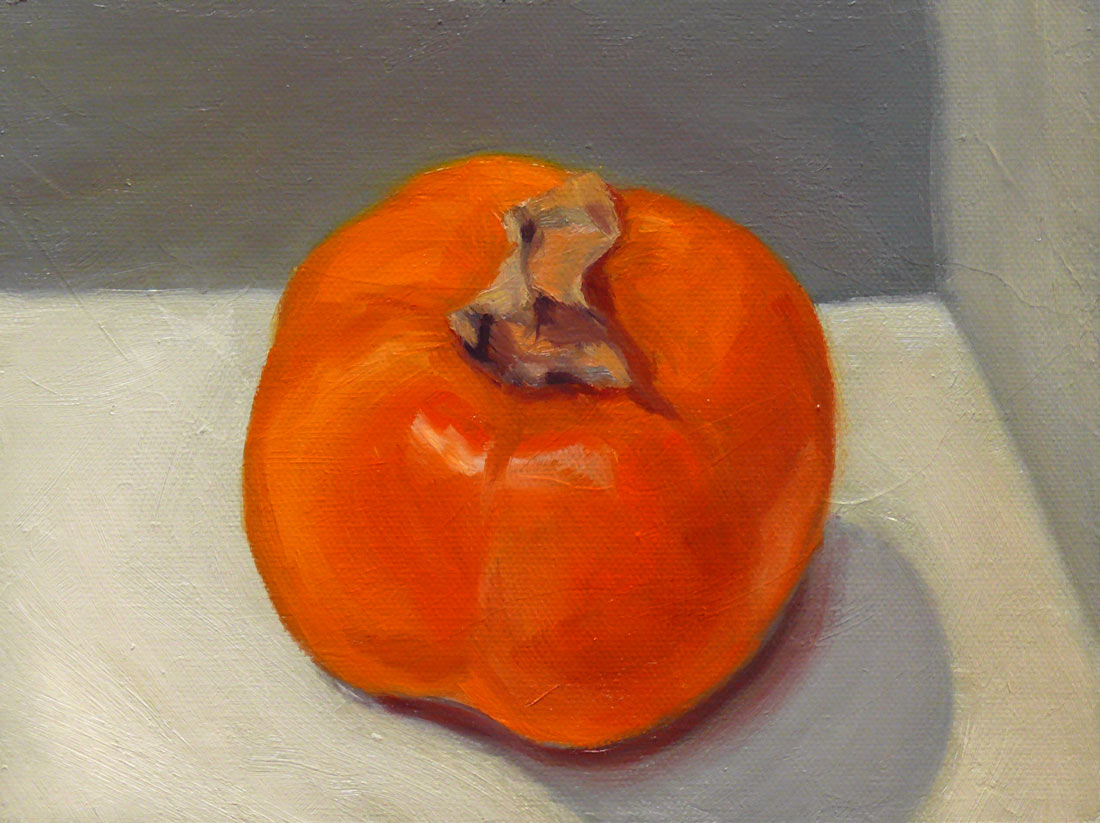
What is a Persimmon?

What is a Persimmon #2 (oils)

Oil on panel, 6″x8″ (Larger)
(painted on top of a small plein air landscape that didn’t work)

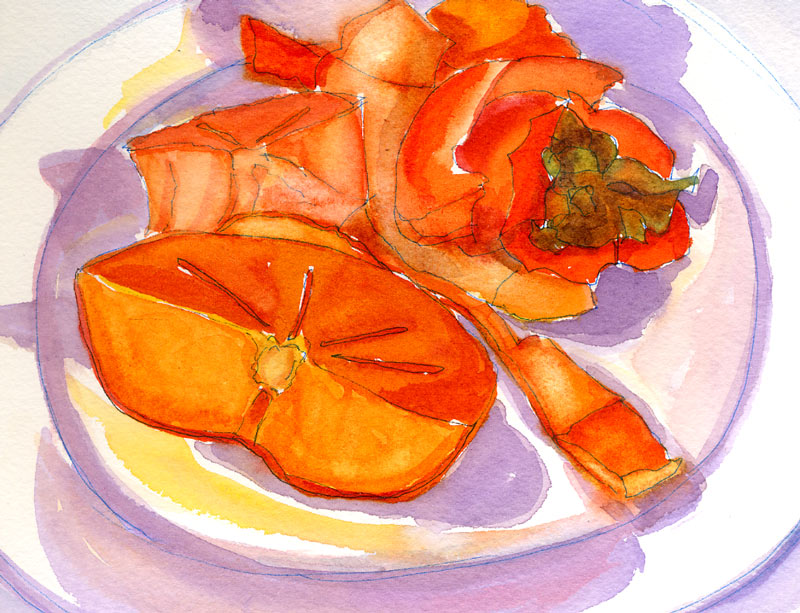
At my favorite little produce market, Colusa Foods in Kensington, I asked one of the expert produce guys which fruits were good right now. He recommended Satsuma tangerines and Persimmons. I’d never eaten either of these fruits and decided to give them a try. The tangerine was amazingly delicious, tasting like childhood favorites Creamsicles (orange popsicles filled with vanilla ice cream) and Orange Julius (an orange-flavored milkshake). But the persimmon perplexed me.

What is a Persimmon #1 (watercolor)

Watercolor on cold pressed paper, 5″x7″ (Larger)

I’d never eaten a persimmon before, didn’t know how to spell it let alone how it should be eaten or what it would taste like. Of course I checked the internet and learned that one peels it and then eats the inside. From what I read it sounded like the inside might be mushy, which didn’t sound too appealing but it felt pretty hard from the outside. I had no idea what I’d find when I cut into it. I decided to make it an adventure, first doing some paintings of the persimmon whole (above in oils and watercolor) and then painting the cut open fruit.

What is a Persimmon #3 (watercolor)

Watercolor on cold pressed paper, 5″x7″ (Larger)

I cut the top off, per the instructions I found and then cut it down the middle, hoping for a pretty seed pattern. Unfortunately I cut it on the wrong middle and the only thing visible was a faint line down the center. So I cut it in half the other way and discovered a beautiful sand dollar sort of design. But since I’d cut it the other way first I didn’t think it would make a great composition so I decided to eat one of the quarters. YUM!!!! It was sweet and crunchy and different — a new taste entirely! The only way I can describe is that it tastes happy and bright. I just ate the last quarter, leaving the skin on, and that was OK too–more like eating an apple only better. Wowee.

Categories
Art theory Landscape Oil Painting Other Art Blogs I Read Outdoors/Landscape Painting Photos Plein Air

View from Viansa Winery

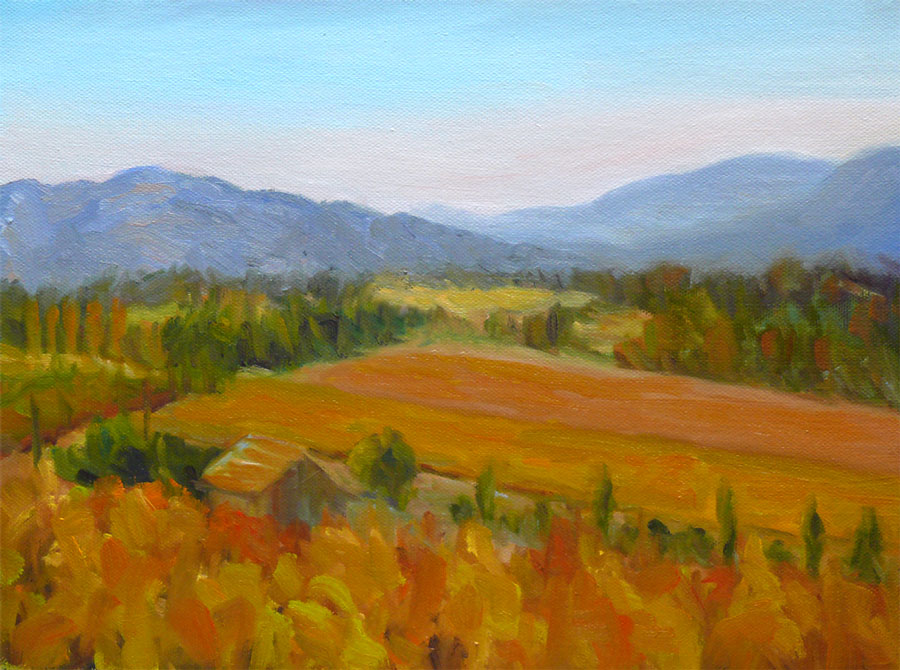
Oil on Canvas Panel, 12″x9″ (Larger)

On November 3 I went to Viansa Winery in Sonoma County with my plein air painting group. It’s a beautiful estate in the wine country with wonderful views in every direction. I painted the first layer of this painting on site and then today at home I painted another layer, correcting the original plein air sketch. I set my timer for one hour and completely redid the whole painting in about 45 minutes. Then I had dinner and when I came back I forgot my plan to do a one-hour painting and spent another two hours fiddling around with stuff I could have left alone.

As Karen suggested in her comment here a couple days ago, it’s good to focus on one goal per painting. I did that with this painting. My goal was to create a sense of distance, and I think I accomplished that. (Yay!) What’s interesting is that even though it’s only been three weeks since I started this painting, I see how much I’ve learned just in that short time…or maybe how much of what I’ve learned in the past year is starting to sink in and take hold. The on-site painting was out of proportion and very flat–no sense of depth or distance. But it was colorful which was my focus on that day — getting some color into my painting.

As I worked on this tonight I was thinking about two things my teacher recently pointed out to me that applied to the problems I’d had with this painting:

  1. Paint the dog before the fleas (in other words, get the big shapes in before starting on the little details)
  2. When you have man-made objects in a painting, such as buildings or fences, they have to be the right size or the whole painting will look wrong because we know what the object is and what it’s size is.

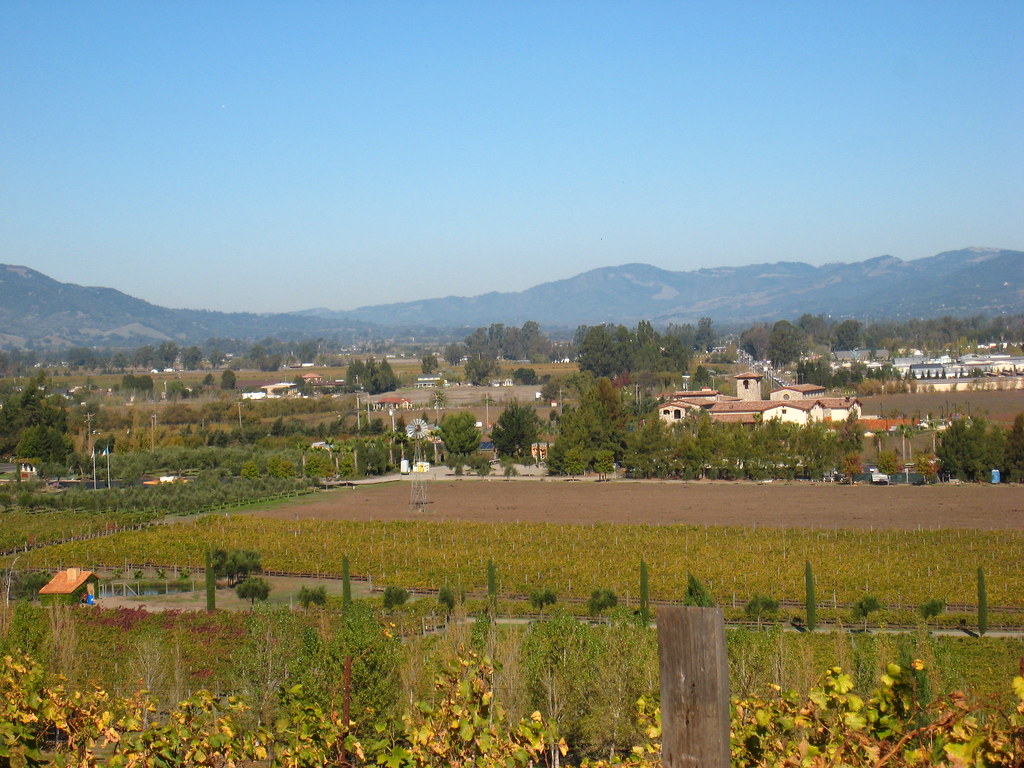
Here’s the photo I took of the scene:
View from Viansa Winery Photo
Larger

In the original version I got really involved in painting the little building in the front left and the bigger one halfway back on the right. But I’d made them bigger than they should have been so I could paint the details. And they were definitely the fleas, not the dog!