Categories
Art theory Landscape Oil Painting Outdoors/Landscape Painting Plein Air Sketchbook Pages

Learning to Stop (making ugly paintings)

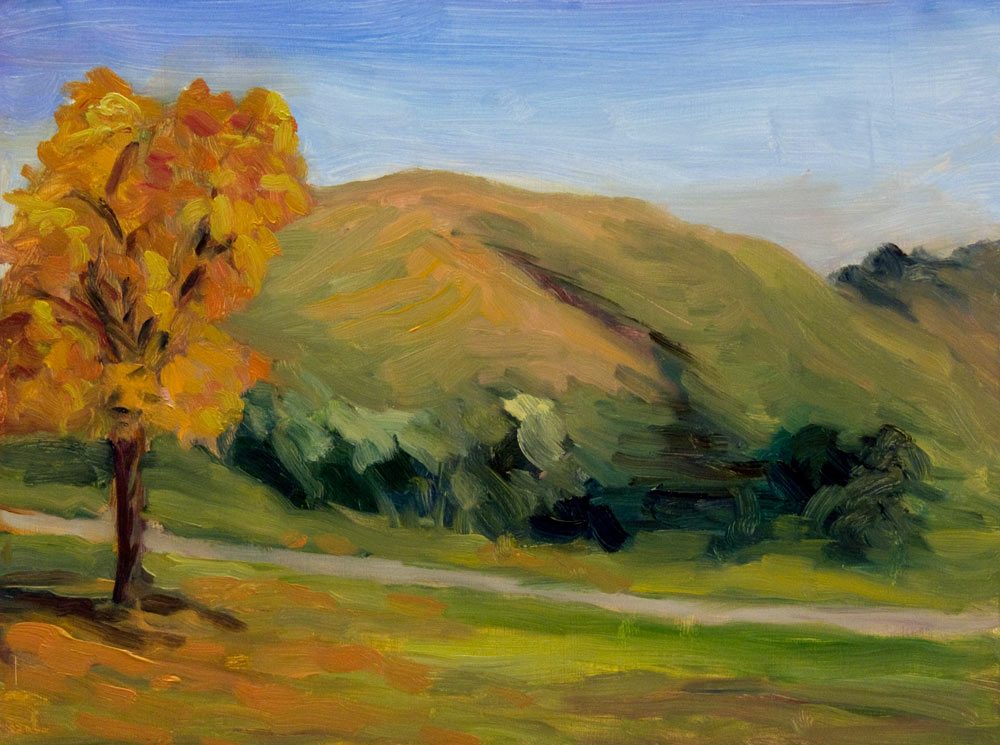
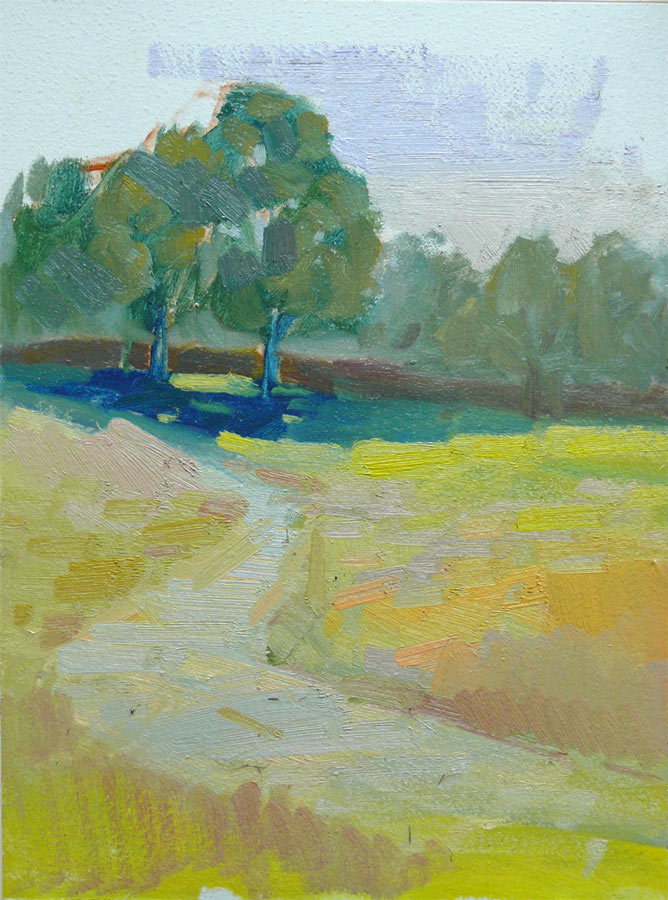
Plein Air - untouched in studio

Oil on canvas panel, 9×12″ (Larger)

The painting above is not great, but it’s loose and free and painted plein air with no touching up in the studio.

I’ve been painting and repainting the formerly plein air painting below over the past few days and it’s been both a good learning experience and discouraging. Mostly what I’ve learned is NOT to (re)do it. When I try to “just fix one little thing” I end up working for hours (days in this case), completely losing the freshness of the original plein air painting and, at the end of the day, finding myself right back where I started from, with dull, overworked paint.

This is the final version and I hereby VOW to not touch it again (other than to throw it in the trash!) I thought I vowed that yesterday and yet today I found myself trying one more time:

Briones again...the end

At several points in the process I had a good painting but just kept on fixing one more little thing until…well…it’s like scratching mosquito bites…I just keep scratching at until it bleeds and then I’m sorry. The original before messing with it appeared on my easel in my post about my studio here (first photo).

This was yesterday’s version:

Plein  Air - finished in studio

Part of the problem with retouching in the studio is that the reference photos rarely capture the colors and memories of the scene. This one sure didn’t and yet I continued to work from it and wondered why everything looked so dull!
Briones photo ref

(above: the bad reference photo)

Photoshopped photo reference

(Above) I even tried painting over the reference photo in Photoshop to try to use that as reference instead but I still ended up with mud.

So here’s what I’ve learned (AGAIN!):

  1. Stop! Don’t waste time. Make progress by painting more paintings not the same one over and over
  2. Use more paint and less medium.
  3. Mix the right color, put it down and leave it alone.
  4. Messing with a hopeless painting forever is not art, it’s OCD (obsessive-compulsive disorder). I need a painting alarm like those car alarms that say, “Step away from the painting…” or a Sister Mary Catherine to smack my knuckles with a ruler and snatch the canvas away from me…
Categories
Art theory Oil Painting Painting People Portrait

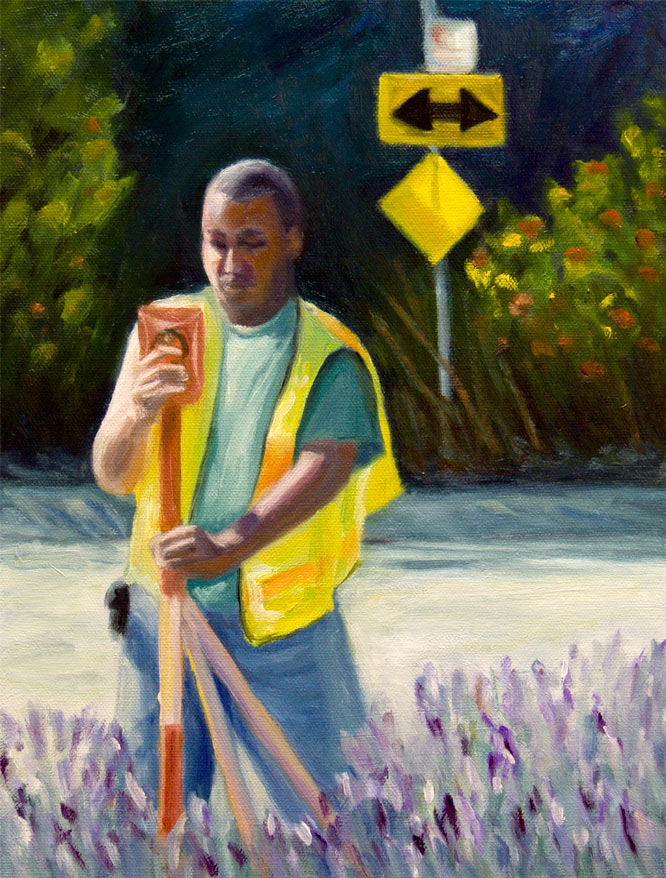
Surveyor Again

Oil on canvas panel, 12″ x 9″ (Larger)

I wasn’t satisfied with the way this painting turned out the first time I declared it done so I worked on him again. I fixed some drawing problems (as much as they could be fixed this far along), lightened the street, darkened the background and the street signs, and worked on his face again. It’s not perfect but it’s enough better that it won’t keep bugging me to finish. Now I can move on to the next painting.

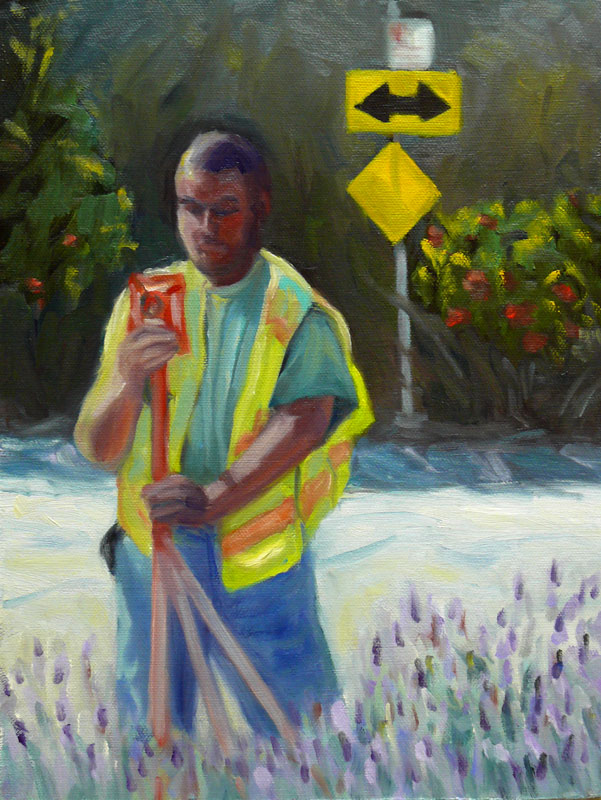
Here’s the way it looked before:

The Surveyor in the Lavender

(Larger)

Before I had a blog I’d work on paintings for a long time, adjusting them until they were as perfect as I could get them. Since blogs require constant feeding, and because I’m trying to do lots of paintings to get more practice, I tend to declare paintings done and ready to post maybe sooner than I should, since I go back and work on them again. Perhaps I should just call them all “works in progress.”

On the hand, since a painting can be worked on endlessly (especially oils), I suppose it would be possible to redo the same painting over and over, learning a little more with each attempt, until you eventually were a skilled painter who’d made ONE really good painting. Certainly authors do that with books: they’re only done when they’re published. I’ve heard artists say that a painting is only finished when someone has bought it and it’s left your studio.

Anyway, this one is done and I’m excited about the next painting. One more to add to my stack of learning opportunities!

Categories
Art theory Landscape Oil Painting Other Art Blogs I Read Outdoors/Landscape Painting Photos Plein Air

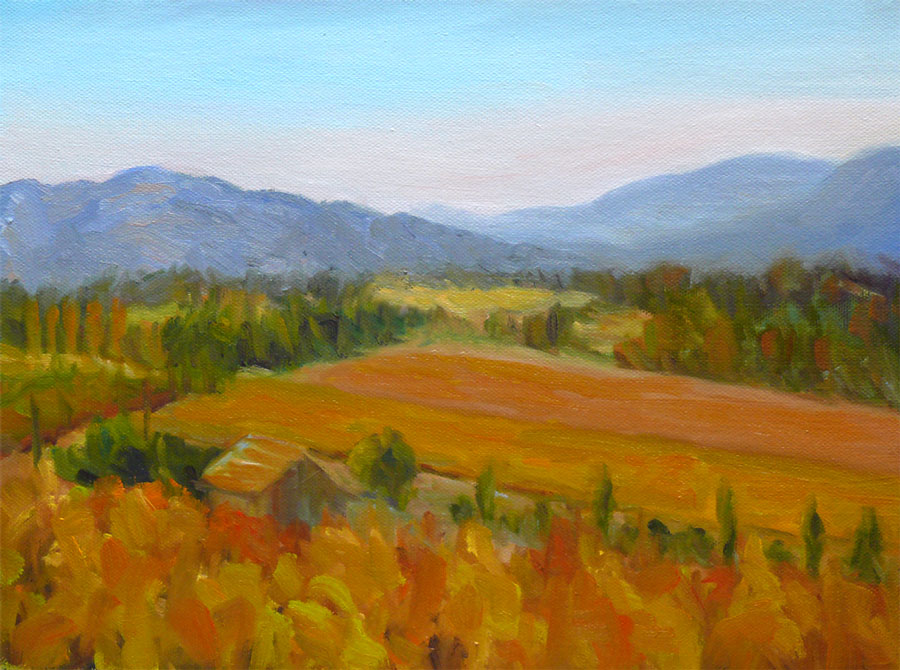
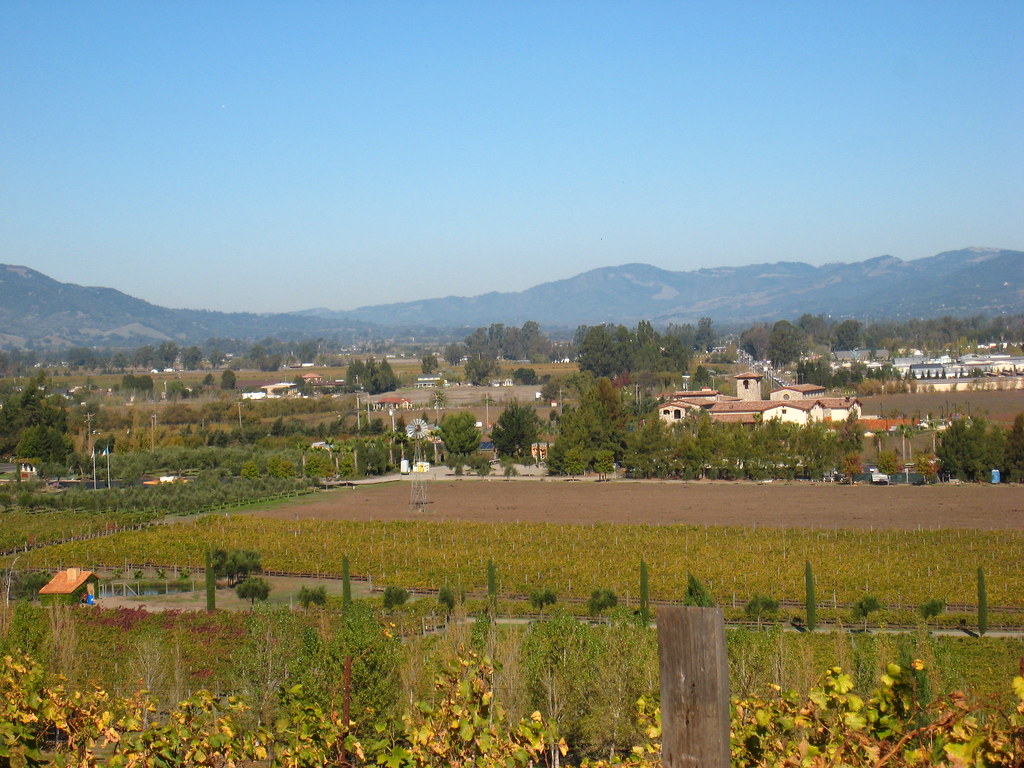
View from Viansa Winery

Oil on Canvas Panel, 12″x9″ (Larger)

On November 3 I went to Viansa Winery in Sonoma County with my plein air painting group. It’s a beautiful estate in the wine country with wonderful views in every direction. I painted the first layer of this painting on site and then today at home I painted another layer, correcting the original plein air sketch. I set my timer for one hour and completely redid the whole painting in about 45 minutes. Then I had dinner and when I came back I forgot my plan to do a one-hour painting and spent another two hours fiddling around with stuff I could have left alone.

As Karen suggested in her comment here a couple days ago, it’s good to focus on one goal per painting. I did that with this painting. My goal was to create a sense of distance, and I think I accomplished that. (Yay!) What’s interesting is that even though it’s only been three weeks since I started this painting, I see how much I’ve learned just in that short time…or maybe how much of what I’ve learned in the past year is starting to sink in and take hold. The on-site painting was out of proportion and very flat–no sense of depth or distance. But it was colorful which was my focus on that day — getting some color into my painting.

As I worked on this tonight I was thinking about two things my teacher recently pointed out to me that applied to the problems I’d had with this painting:

  1. Paint the dog before the fleas (in other words, get the big shapes in before starting on the little details)
  2. When you have man-made objects in a painting, such as buildings or fences, they have to be the right size or the whole painting will look wrong because we know what the object is and what it’s size is.

Here’s the photo I took of the scene:
View from Viansa Winery Photo
Larger

In the original version I got really involved in painting the little building in the front left and the bigger one halfway back on the right. But I’d made them bigger than they should have been so I could paint the details. And they were definitely the fleas, not the dog!

Categories
Art theory Oil Painting Outdoors/Landscape Painting People

The Surveyor in the Lavender


Oil on canvas panel, 12×9″ (Larger)

A couple weeks ago there was a team of surveyors on my street, measuring the block. I’d always wondered what they saw when they looked through their surveyor thingees on tripods. I asked them what they were doing, and whether I could look through their device to see what it looks like. It was really amazing. This guy stood at one end of the block and held up his device, which I think was a target and the other guy looked through his scope and aimed it at the target. It had a powerful computerized magnifier in it, so that from nearly block away, the target looked like it was one inch away. Then I asked if I could take pictures of them and they agreed. The other guy was too far away and this one was cuter anyway so I took a bunch of pictures of him and then selected one of the photos to paint.

I spent a lot of time drawing on the canvas freehand before I started painting, trying to get the drawing correct. I used a white pastel pencil to draw on the medium-gray toned canvas, which worked really well — it was easy to wipe off for correcting and didn’t smear into the paint.

There’s more I could do to finish this painting but my goal right now is to make lots of paintings for the practice instead of taking a few paintings as far as I can. On the other hand, if you see any areas for improvement or problems with this painting, I’d greatly appreciate the critique.

Categories
Art theory Landscape Oil Painting Other Art Blogs I Read Outdoors/Landscape Painting Portrait

Watching Painting Videos

Watching Painting Videos

I’ve been renting videos from SmartFlix.com on oil painting landscapes, portraits, and plein air painting and have enjoyed watching most of them, and so has Fiona, pictured above. SmartFlix.com is a website where you can rent videos on any kind of artistic endeavor or just about any other “how-to” — from welding to piloting a helicopter.

The service works well. They charge $10 for each video (theoretically for a week but I’ve kept some two weeks with no problem) They mail them to you with return packaging and postage included. My only complaint is that occasionally, after ordering a video, I find that there will be a wait for it while it comes back from the last member. Usually they’re shipped within a few days. There are no membership or monthly fees. You pay only when you rent a video. Like Amazon, there are user reviews which I found very helpful in making my selections.

Here are the videos I’ve watched so far, with my comments about them. (Please click “Continue Reading” below.)

Categories
Art theory Glass Oil Painting Painting Still Life

Conscious Competence?

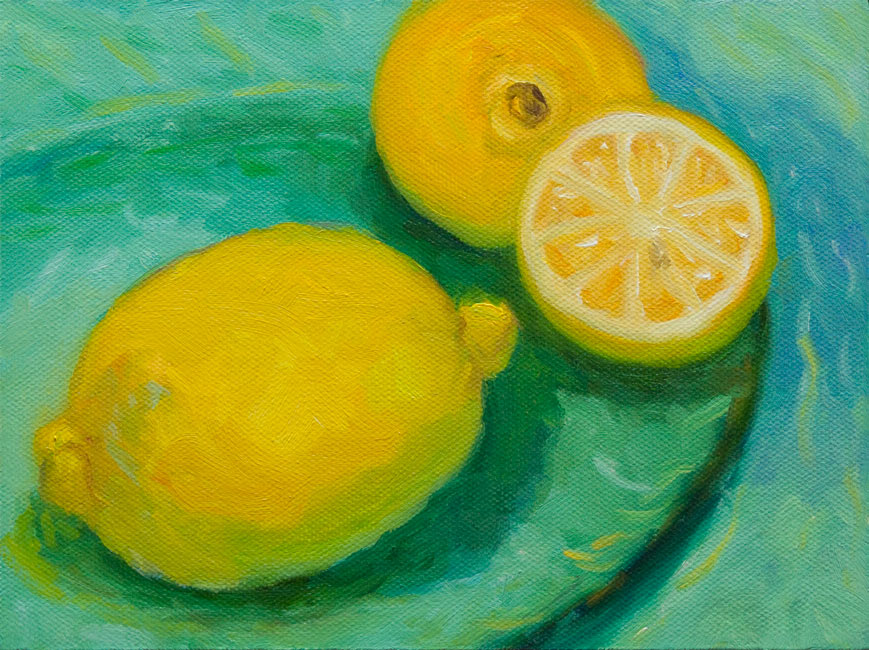
Lemons on Green Glass Platter

Oil on canvas panel, 8×6″
Larger

I think I’m finally making a little progress with my oil painting. I’m starting to understand about color temperature and how to make transparent darks (which you absolutely have to protect just like the white of the paper in watercolor). I couldn’t figure out how to get the little highlights on these lemons but maybe I have to wait for the paint to dry and then use a dry brush to sweep across it. Or maybe I could do it with a knife? I tried painting it on with a brush but just kept smearing and muddying the paint. Any suggestions?

In July, I did these lemons on a different green glass plate and …

Lemon on green glass plate (P1010468)
Larger

…I think I see some progress.

My friend Judith told me about a learning theory that divides the stages of learning into four stages:

  1. Unconscious incompetence .(You don’t know how much you don’t know and sometimes have beginner’s luck that makes it seem like it will be easy to learn).
  2. Conscious incompetence. (Now you’ve realized how much you don’t know and how bad you are at the thing you’re trying to learn, and how many people are way ahead of you. You may have the knowledge or information about HOW to do something but not the skill to do it.)  A lot of people give up at this point. This is where I’ve been for past couple months.
  3. Conscious competence. (You understand how to do it, you’ve practiced and built some skill, but it doesn’t come naturally. You have to think through each step but you can do it and a basic level.)
  4. Unconscious competence. (It just comes naturally and you don’t have to constantly think through each step.)

Mom was half-right when she said “practice makes perfect.” I know that when I strive for “perfect” I only end up miserable. I think the saying should be “Practice makes Progress” and right now progress feels great after being mired in Conscious Incompetence for months!

Categories
Art theory Oil Painting Painting Plein Air

What “we” did in painting class today

My teacher helped paint this

Oil on 12×9 panel
Larger

First a disclaimer: There’s more Elio than Jana in this painting. I started this painting and really liked where it was going, with a decent composition and nice fressh, bright colors, but asked for help when my path wouldn’t stop looking like a waterfall. My wonderful teacher, Elio Camacho, has been hesitant to paint on my paintings but I encouraged him to do so since I was confused. Once he’d solved all my problems and added some beautiful touches, I stopped working on this one and started another so I could save this in order to remember the things he did.

Elio is such an amazing teacher. His shares his incredible enthusiasm for painting, his knowledge, experience and skill so generously. After the five-hour class ends, he starts a very large painting and paints until sunset. If we stick around, he will continue answering questions while he paints, which makes it very tempting to stay and paint or just hang out for another hour or two.

I thought I’d share a few of the things I learned in class today that I think are going to really help my painting (CLICK on “Continue Reading” below) to read what I learned about color, plein air composition, highlights, mediums, darks and sky-holes:

Categories
Art theory Faces Oil Painting Painting People Portrait

Persistence, Acceptance and Freedom

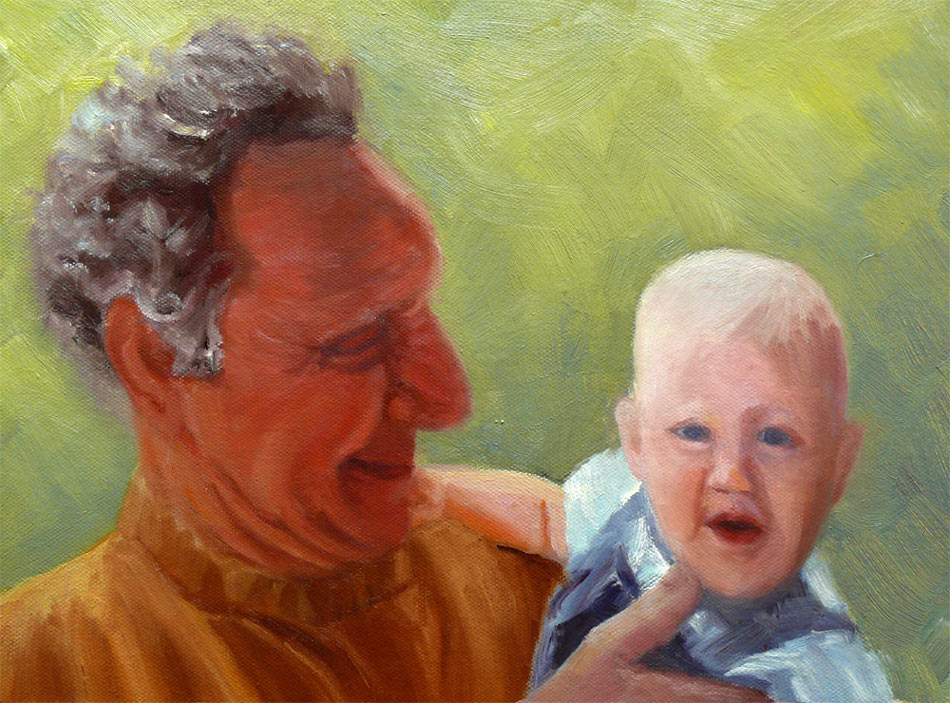
Don and Robin

Oil on panel, 9×12″
Larger

This is a portrait of my son and his grandfather, Don, from a photo taken 30 years ago. I started working on this painting a few days before he died two weeks ago. Although he was afraid of dying he had tremendous acceptance, from years of regular meditation. Visiting him was a very peaceful experience. Even though he was experiencing so much loss, having been an athlete all his life and now watching his body fail, he was incredibly serene. We brought him some photos to look at, including the one from which this picture was made, and they cheered him up and made him laugh.

The reason I titled this post “Persistence, Acceptance and Freedom” is both because of Don, and also because I’ve had to accept that I don’t yet have the skills to make this a good portrait in oil paint, despite my persistence, and that this painting is as far as it’s going to get and it’s time to let it go. And that gives me much needed freedom, after working on this for way too many days. In the beginning it was a wonderful way to remember Don and think about those early days. I was determined to do the best I could but now by accepting that this is as far as I’m willing to take it, I free myself to move on to something else.

I didn’t spend enough time with the initial drawing, the photo I was working from was old and funky, and the color had faded strangely. Initially there were three generations in the picture, my son, his dad, and his grandad. First the two men were great but the baby was a mess. Then the baby got good but I messed up one of the men. After scraping off and redoing all or some of the people many, many times I decided to eliminate my son’s Dad, paint the background and clothes, and call it done. The thing with oil painting is that you can edit forever but I need to stop.

I’ve read it’s better for learning to paint hundreds of one-hour paintings than to spend hundreds of hours on one painting. I’ve tried the later and it’s not fun. I’m ready for the former and excited about doing timed paintings — more like sketches — one hour apiece.

Categories
Art theory Landscape Oil Painting Outdoors/Landscape Painting Plein Air

Tilden Park Re-do

Tilden Park

Oil painting on panel, 9″x12″
Larger

Last Sunday in my plein air oil painting class I painted this scene on this panel but it pretty much looked like dark mud so I worked on it some more today. I like to keep going with a painting until I either succeed, push it as far as it can go, get sick of it, or it just gets too late and I have to go to bed. I think tonight I hit all of the above.

I have the hardest time painting outdoors in the bright sun. Everything ends up much darker than it should be. I’m also not very good at mixing light colors in oils—possibly due to never using white in watercolor. Adding white to oil paint creates quite different color mixtures than adding more water to watercolor to let the white of the paper shine through and lighten the color.

I’m going to be plein air painting both Saturday and Sunday this weekend, and given the weather report of sunny days, I’ll continue trying to find my way painting in bright light. Tomorrow I’m going to try wearing my polarized sun glasses and see what I come up with. I’m also going to try forcing myself to make high key paintings, with most of the painting lighter than middle gray to force myself to get away from the dark mud.

Categories
Art theory Oil Painting Painting Still Life

Pear on Blue Plate

Pear in Oil

Oil on canvas panel, 8×6″
Larger

After feeling like I’d taken one big step forward with my painting on Saturday, in Sunday’s painting class I felt like I’d taken two giant steps backwards. I wasn’t inspired by the view of dry, grayish rolling hills and just kept putting paint down, deciding it was all wrong, and scraping it off. I guess I was just tired after painting day and night on Saturday and also there were some new concepts that needed to sink in.

I was determined to do a better job today and wanted to focus on the guidance I received from my teacher on Sunday: avoiding muddy colors by putting strokes down and leaving them, focusing on color temperature and using colorful grays. I painted the pear about three or four times this evening, getting it almost done and then messing it up one way or another, scraping off all the paint, and starting over.

As it got closer to bedtime I got even more determined to put strokes down and leave them. It worked and I’m happy with the results.